
Rachel’s Towing & Recovery · 24/7 Dispatch
The First Ninety Seconds Matter More Than the Tow Does.
Stopped on the ramps at exit 201, dead on 520 in the middle of the beach run, or blocking a whole street downtown. Call, get told where to put yourself, and have a pink truck moving while you are still talking.
(321) 728-1869 answered live, day and night
Cocoa, FL
Get Off the Pavement Before You Get On the Phone.
The instinct when a car dies is to reach for the phone. Do the other thing first. Hazards on, and if there is any roll left in the car at all, spend it getting off the travel lane. A turn lane, a shoulder, a gas station apron, a driveway cut, anything with pavement and no moving traffic on it. Momentum you already have is the cheapest safety you will ever get, and it disappears in about eight seconds.
Once the car is stopped, decide whether being inside it or outside it is safer, because the answer is different depending on where you landed. If you made it to a real shoulder or a lot, everyone gets out through the doors on the side away from traffic, walks back behind the car, and stands well off the pavement. Behind, never in front. If you are on I-95 or a ramp, that means up the embankment and away from the guardrail, not tucked between the car and the rail where there is nowhere to go.
If you are stuck in a live lane with traffic still moving around you, or the shoulder is too narrow to stand on, that flips. Stay belted inside with the hazards flashing and call 911 before you call us. Same if anyone is hurt. An officer can slow and shield the lane in a way a tow truck cannot, and the two calls do not compete. Once you are safe, dispatch takes it from there.
Three Roads Produce Most of the Bad Ones Here.
The 520 corridor is the one that generates the most frightened phone calls. It carries everyone heading east to the beaches and everyone coming back, and on a weekend afternoon or a holiday it runs heavy for hours with limited places to pull off cleanly between the light-controlled stretches. A car that quits there does not simply inconvenience one driver, it puts a stationary object in front of a lot of moving ones.
US 1 is different trouble. It is fast in places, dense with driveway entrances and signal lights in others, and drivers turning in and out are watching for gaps rather than for a stopped car. If you can pick where you stop, pick away from a turn-in.
Then there is exit 201. Interstate shoulders feel wide until you are standing on one. Traffic passing at seventy sounds and feels different from traffic on a surface road, and the ramps have merging drivers looking left over their shoulder instead of forward. If you end up there, get right, get out on the passenger side, get back and up, and stay there. Do not open the hood to look at anything.
Getting off the road first is not us being careful. It is the only part of this you control.
Rachel’s Towing & RecoveryDowntown Streets Have a Problem of Their Own.
Cocoa Village is not dangerous the way an interstate shoulder is. The problem down there is geometry. The streets are old and narrow, several are effectively one lane once cars are parked along both sides, and there is often no way around a stopped vehicle at all. One dead sedan can hold up a delivery truck, four cars behind it, and whoever is trying to come the other direction, and the situation gets worse by the minute rather than better.
That earns a bump on the dispatch board, because the fix is time-sensitive even though nobody is in danger. Tell dispatch the street, the nearest cross street, and whether cars are parked along both sides. A driver who knows the block is tight brings something that fits and works out his approach before he turns in.
Storms Change What the Right Answer Is.
Afternoon storms here go from bright to blinding in a few minutes, and the roads around US 1 and the low spots near the river take water fast. Two rules cover almost everything.
The first: if your engine cuts out in standing water, do not turn the key again. Cranking a flooded engine is how a repair becomes an engine replacement. Leave it alone and tell dispatch it sat in water, so the driver loads it the right way rather than trying anything clever.
The second matters more. Never sit in a car with water rising around it waiting for a tow truck. Get out, get to higher ground, and call 911. A truck is not the right kind of help for that, and no vehicle is worth the wait. When the water has gone down and the car is stranded rather than surrounded, that is a tow, and we will come get it.
What to tell dispatch, in this order
- The road and the nearest mile marker or cross street.
- Whether you are off the pavement or still in a live lane.
- Year, make, model, and whether the wheels turn.
- How many people are with the vehicle.
What You Tell Dispatch, In the Order It Helps.
The call is short because it is meant to be. A dispatcher who has worked this county knows the roads, so a few specifics do a lot of work.
- Whether anyone is hurt and whether you are in a moving lane. That answer changes everything after it.
- Road name plus the direction you were driving. On I-95, the mile marker if you can see one, or how far past exit 201 you drifted.
- The last light, business sign, or cross street you passed.
- Year, make, color, and whether the car still rolls and steers.
- A dropped pin by text, which beats every description above and takes ten seconds.
You will hear the price before a truck leaves the yard, and a real arrival window rather than a hopeful one. If 520 is stacked to the causeway, we say so.
Some of These Calls Are Not Really Emergencies.
Plenty of people phone in scared and turn out to be fine. A dead battery, a flat, an empty tank, or keys shut inside is roadside work, done at the curb, and you drive away instead of following a truck. If anything hit anything, accident and collision towing runs off the same board with no second phone call. A bike needs its own straps through motorcycle transport, and anything heavier than a pickup goes to the heavy fleet.
If the car simply quit somewhere safe and today is just a bad day, that is the everyday tow. If it needs all four wheels off the ground for drivetrain reasons, dispatch sends the flatbed. You do not have to work out which. Say what happened and the right truck gets assigned. Everything running through this part of the county sits on the Cocoa coverage page, the service itself is laid out on the emergency towing page, and the gallery shows the trucks. If you would rather type than talk, send dispatch the details.
Stopped on 520, US 1, or the interstate? Somebody is awake.
(321) 728-1869Questions People Ask From the Side of the Road.
Not here? A dispatcher can answer it in ten seconds. Call at any hour.
(321) 728-1869I am on the shoulder of I-95 near exit 201. Where should I wait?
My car died in the middle of 520 during the beach rush. What now?
Cocoa Village is narrow and I am blocking a whole street. Does that change anything?
There is water over the road and my engine cut out. Should I try restarting it?
It is two in the morning on US 1 and nothing is open. Is anybody actually answering?
What can I say about my location that actually speeds things up?
Off the Lane, Behind the Car. Then Dial.
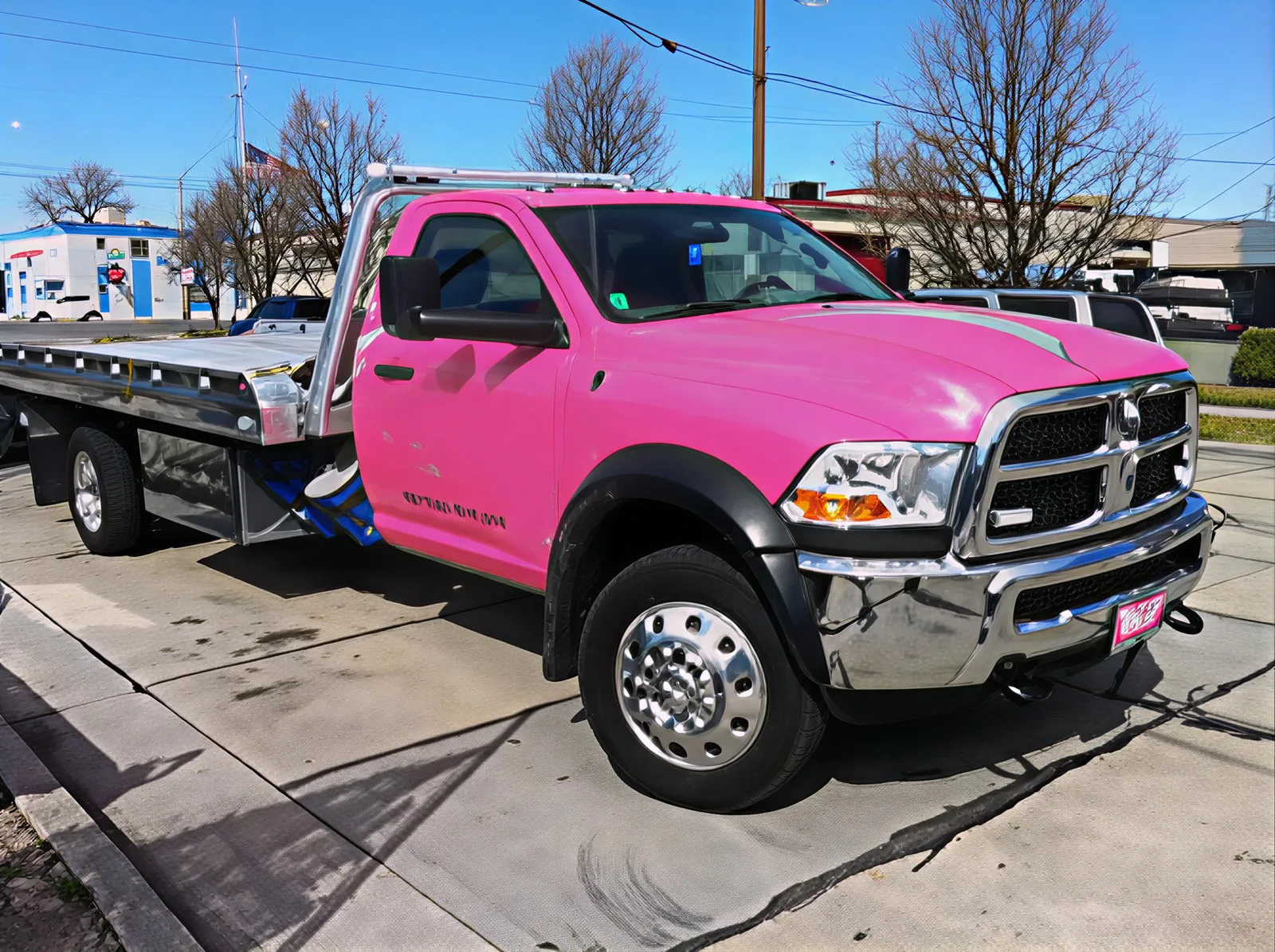
A live dispatcher takes the road, the direction, and who is with you, quotes the run before it leaves the yard, and sends something bright pink you will spot from a long way off.
(321) 728-1869Nobody in danger? Send dispatch the details or look through the pink fleet at work.