
Rachel’s Towing & Recovery · 24/7 Dispatch
Stopped Where There Is Nowhere to Pull Over.
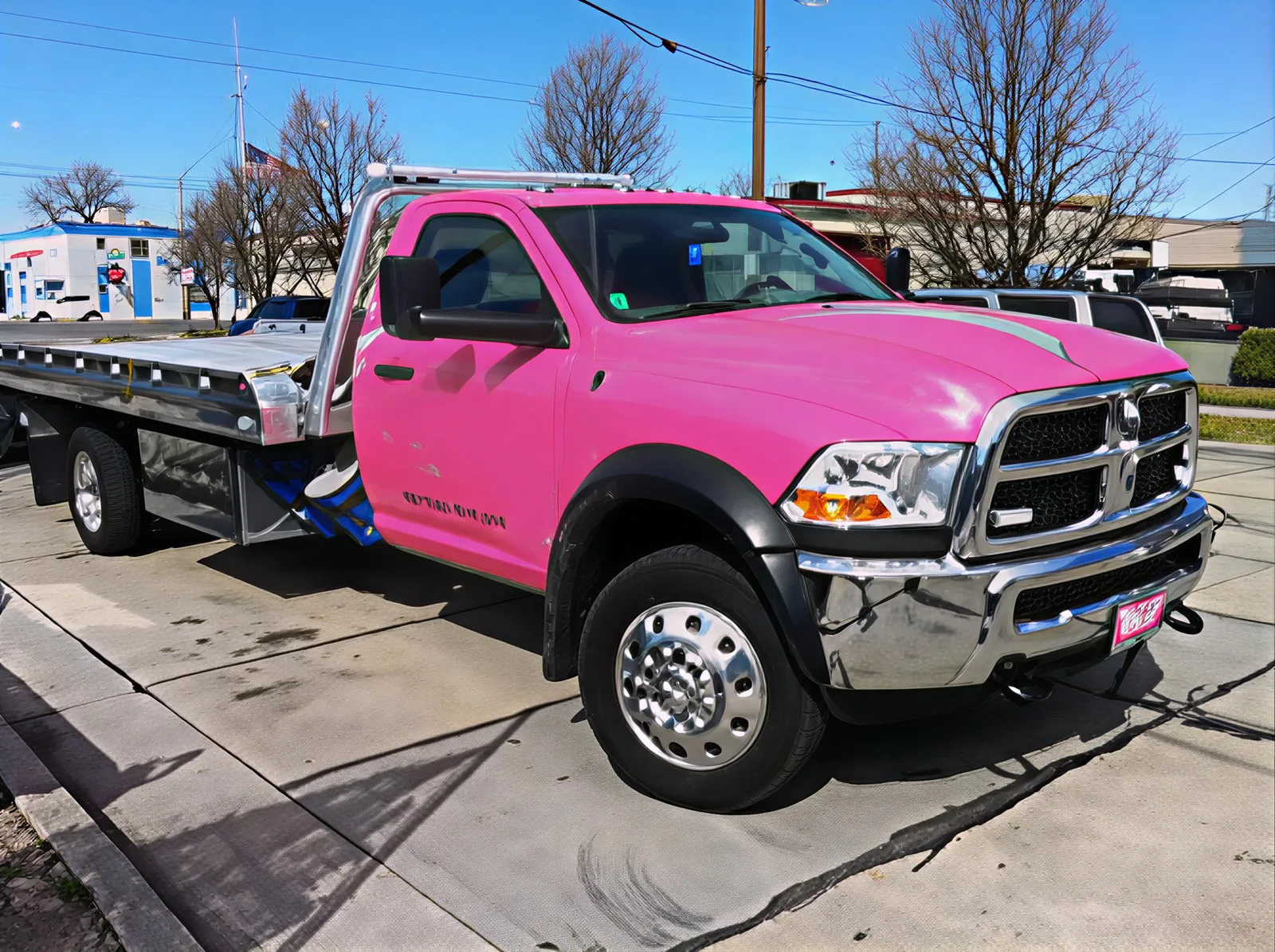
Long stretches of A1A here give you a curb and a swale and not much else. Tell a live dispatcher where you are and who is with you, and a pink truck starts south while you are still on the phone.
(321) 728-1869 answered by a person, not a menu
Satellite Beach, FL
The Shoulder You Are Counting On May Not Exist.
Drivers picture a breakdown the way it looks on an interstate: pull right, coast onto twelve feet of paved shoulder, wait somewhere out of the way. A1A through this town does not always offer that. In several stretches the pavement ends at a curb, a swale, a mailbox, or a hedge, and the space you were planning to use is somebody’s front yard.
So decide fast while the car is still rolling. If it has any power left, aim for a real opening: a side street, a church or plaza lot, a driveway apron, a school entrance. Fifty feet of coasting into a driveway is worth more than any amount of good intentions once the car stops dead.
If it stops where there is nothing, hazards go on immediately and the question becomes simple. Are you in a lane cars are actually using? If yes, call 911 before anything else. Police can shield the scene, and that is not a job for a tow truck or for you. Then get everyone out on the side away from traffic and move well back from the roadway. If you are clear of the travel lanes and cars are passing at speed, staying belted inside with the doors shut is the safer call. Anyone hurt at all means 911 comes first.
Quiet Sounds Peaceful Until You Are Standing In It.
This is a residential town that goes to bed. After about ten at night, whole stretches of road can go several minutes without a car, and the neighborhoods between A1A and the river are darker and emptier than most people expect for a place a mile from a highway.
That quiet is genuinely good news for arrival time. It is not good news for standing outside. Stay in the vehicle, doors locked, hazards running. Do not start walking toward the lights of a plaza to get better signal, and do not accept a ride from someone who pulls up unless you know them. If the wait is stretching past what you were told, call back. Dispatch would much rather answer twice than have you sitting there guessing.
Keep some battery on the phone. Turn the screen down, close what you do not need, and if you have a charger in the car, use it. The phone is the only thing connecting you to the road right now.
Getting off the road first is not us being careful. It is the only part of this you control.
Rachel’s Towing & RecoveryBase Hours Are Not Suggestions.
A large share of the people who call from here are tied to a schedule that does not move. Shift start times, gate hours, and duty days do not care that a starter motor quit in the driveway. That is worth saying out loud on the call, because it changes how we handle it.
You do not have to be present. Give dispatch a name and phone number for whoever is meeting the driver, say where the keys will be, and the run happens while you are working. If nobody can be there at all, say that too and dispatch will tell you exactly what is possible with an unattended vehicle. What creates problems is nobody knowing the plan until the driver is standing in an empty driveway.
When the Causeways Close, Nothing Crosses. Including Us.
Everybody on this island knows the crossings are the whole story in a storm. When wind gets high enough, the bridges shut, and at that moment the island is on its own. No tow truck is coming from a mainland yard, and no amount of urgency changes the physics.
Which is why the advice for storm weeks is to move early. If your car is drivable and you have any doubt about where it is parked, move it to higher ground or across to the mainland before conditions turn rather than after. If you know you may need a tow that week, call at the front of the window, not the back.
During the event itself, dispatch will tell you plainly when a run cannot be made. That is not a brush-off. Being told honestly that nothing is crossing for six hours lets you make a real decision, which beats waiting on a truck that was never going to arrive. When the bridges reopen, the board runs in order of who is in danger, not who called loudest.
What to tell dispatch, in this order
- The road and the nearest mile marker or cross street.
- Whether you are off the pavement or still in a live lane.
- Year, make, model, and whether the wheels turn.
- How many people are with the vehicle.
Water Across the Road Is Deeper Than It Looks.
Summer storms drop a lot of rain in a short time, and the low spots hold it. Standing water on asphalt always reads shallower than it is, which is why so many of these calls start with somebody who thought they could make it through and could not.
If your engine quits in water, leave the key alone. Cranking a motor that pulled water into the intake is how a repair bill becomes a replacement bill. Tell dispatch the car went through water so the driver arrives planning to load it cold. If you can safely get yourself out and to dry ground away from the roadway, do that. If moving water is involved at all, get out and get away from the vehicle, and call 911.
The Five Things Dispatch Needs From You.
Answering these quickly is the single biggest thing you can do to shorten your own wait.
- Is anybody hurt, and has 911 been called already?
- Are you in a lane, on a shoulder, or fully off the road?
- Cross street, or the nearest business, school, or park you can see.
- Year, make, color, and whether the car still rolls and steers.
- Where it needs to go, and who is meeting the driver.
The price comes back on that same call, before a truck leaves, and it is the number that lands on the invoice.
Not Every Call From Here Needs a Wrecker.
Sometimes the honest answer is that a tow is the wrong tool. A dead battery, a flat, an empty tank, or keys sitting on the driver’s seat behind a locked door is roadside work, and it gets you moving faster and cheaper. If there was an impact, accident and collision towing runs off the same board. A bike takes its own straps and technique through motorcycle transport, and anything past pickup weight goes to the heavy fleet.
If it turns out there is nothing urgent about your situation at all, the everyday tow covers it, and drivetrain reasons for keeping all four wheels up belong on the flatbed. You are not expected to know which. Describe the situation and dispatch picks. Everything we cover on this side of the county is on the Satellite Beach coverage page, the service itself is described on the emergency towing page, and the gallery shows the trucks. If typing is easier than talking right now, send dispatch the details.
Sitting on A1A with nowhere to move? Dispatch is awake.
(321) 728-1869Asked From a Dark Stretch of A1A.
If your question is not here, a person can answer it faster than a page can. Call any hour.
(321) 728-1869There is no shoulder where I stopped. What am I supposed to do?
Nobody has driven past me in ten minutes. Is that normal here?
I am on base and cannot get out to meet the truck. Can somebody else handle it?
A storm is coming and they are talking about closing the causeways. Should I move the car now?
Water is standing across the road and my engine quit in it. Can I try the key?
Do I get a real arrival time or a guess?
Hazards On. Everybody Clear. Then Dial.
A live dispatcher takes the location, the vehicle, and who is with you, quotes the run before it leaves the yard, and sends something bright enough to spot from the end of the block.
(321) 728-1869Nobody in danger? Send dispatch the details or look through the pink fleet at work.