
Rachel’s Towing & Recovery · 24/7 Dispatch
Emergency Towing in Rockledge.
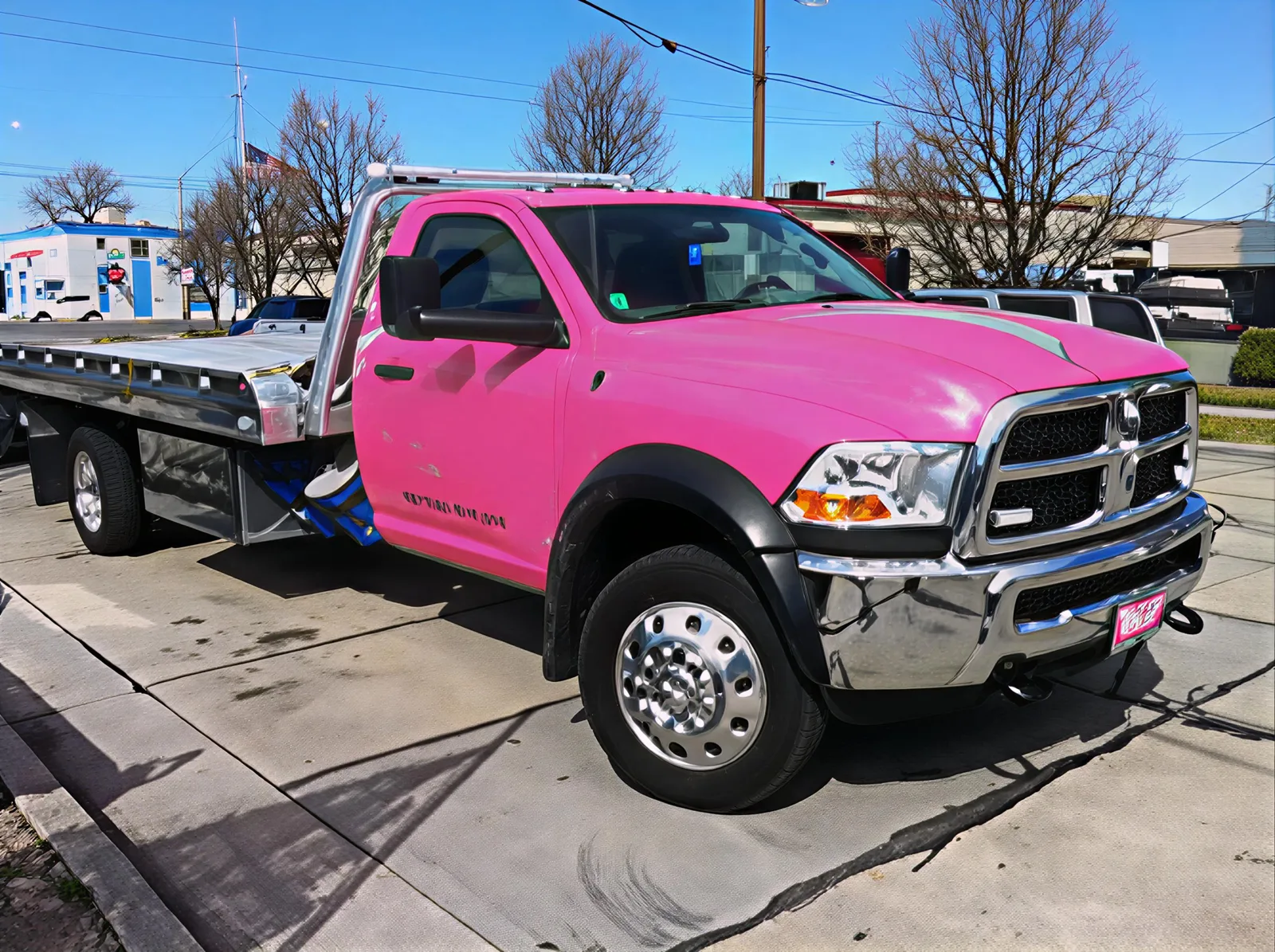
Broken down on US 1, stuck on an I-95 ramp, or sitting in a parking lot that will not let you leave. A live dispatcher answers, prices the run out loud, and puts a pink truck on the road toward you.
(321) 728-1869 one call, straight answers
Rockledge, FL
Two Corridors Produce Most of These Calls.
Rockledge sits on a narrow strip between the Indian River and I-95, and almost everything that goes wrong here goes wrong on one of two roads. US 1 carries the local traffic, the commuters heading up toward Cocoa and down toward Melbourne, the delivery vans, the retirees running errands at midday.
Those two roads fail differently. A car that dies on US 1 usually has somewhere to go, a side street, a shopping center apron, a wide shoulder near the river. A car that dies on I-95 near the Barnes Boulevard or Fiske Boulevard interchanges often has nowhere at all, because the ramps are short and the merge lanes fill quickly. Dispatch asks which road you are on first for exactly that reason. The answer changes what the driver brings, how he stages the truck, and how quickly we need to move you.
The rest of the pattern is neighborhoods and parking lots. Driveways off Rockledge Drive, apartment lots, the strip centers along Barton Boulevard. Those calls are not urgent in the highway sense, but they still matter to the person waiting, and they still get a real arrival window instead of a shrug.
What a Rockledge Summer Afternoon Does to a Breakdown.
Between June and September the sky opens up here almost daily, usually in the middle of the afternoon and usually without much warning. Water sits fast on the low stretches near the river and in the dips under the interstate overpasses, and it takes surprisingly little of it to stop a car. Drivers misjudge the depth constantly, because standing water on asphalt looks shallower than it is.
If your engine quits in water, the single most important thing is to leave the key alone. Cranking an engine that has taken water into the intake is how a repair turns into a replacement. Tell dispatch the car went through water and the driver will show up expecting to load it without starting it, which is what should happen anyway.
Heat is the quieter half of the same problem. A stalled car with no air conditioning becomes genuinely unpleasant within a few minutes in a Brevard August, and dangerous faster than most people expect for anyone older, anyone very young, or anyone with a medical condition. Say so on the phone. It changes how we sequence the calls we already have, and it changes what the driver asks you when he arrives.
We would rather you call from behind a guardrail two minutes late than from the fast lane right now.
Rachel’s Towing & RecoveryTwo in the Afternoon Versus Two in the Morning.
The same breakdown at the same address is two different jobs depending on the hour, and it is worth knowing which one you are having.
An afternoon call happens in traffic. US 1 through Rockledge is busy, the school runs are stacking, and a car stopped in the wrong spot creates a line behind it within a minute or two. That call gets urgency for everyone else’s sake as much as yours. The driver plans where to put the truck before he arrives so the loading does not turn one blocked lane into two, and he will sometimes ask you to stay put rather than trying to coast somewhere better.
An overnight call is the opposite problem. The roads empty out, so getting to you is usually easier, but you are alone in the dark on a road with long gaps between streetlights. Staying belted inside the vehicle with the hazards running is the right call almost every time. Standing outside a stopped car at night is the thing that actually hurts people, far more than whatever broke.
Either way a person answers the phone. There is no menu at three in the morning and no callback queue, because the whole point of emergency towing is that it happens at hours nobody chose. Dispatch will tell you what is coming, roughly when, and what the run costs before the truck leaves the yard.
The Truck We Send, and Why It Is That One.
Dispatch asks what you drive and what happened because those two answers pick the equipment. All-wheel drive goes on the flatbed, no exceptions, since dragging driven wheels is an expensive way to save ten minutes. Anything with a low front bumper, a locked transmission, collision damage, or a soak in floodwater goes on the flatbed too.
A wheel-lift is not a downgrade. On a tight shoulder near a Rockledge interchange, where the truck has maybe a car length to work with, a front-drive sedan with a dead battery often loads faster and safer on the wheel-lift because the setup takes less room and less time in the lane. You will be told which truck is coming and the reason behind it, not left to guess from the sound of the engine.
Sometimes the honest answer is that you do not need a tow at all. A battery, a flat, a lockout, or a few gallons of fuel is roadside work, and sending a flatbed for it would be charging you for equipment you never needed. If the trouble turns out to be a collision rather than a breakdown, the same dispatch board handles accident towing without a second phone call, and anything past the weight of a pickup moves on the heavy fleet. Two wheels get their own answer as well, since motorcycle transport asks for straps and a tie-down technique nothing else on the road needs.
What to tell dispatch, in this order
- The road and the nearest mile marker or cross street.
- Whether you are off the pavement or still in a live lane.
- Year, make, model, and whether the wheels turn.
- How many people are with the vehicle.
Hurricane Season, Evacuation Traffic, and the Weeks Around Them.
Living on the Space Coast means a few weeks every year where the roads behave strangely. When a storm is aimed anywhere near Brevard, I-95 fills with people leaving and US 1 fills with people who gave up on I-95. Cars that have been sitting for months get pressed into service and immediately reveal why they were sitting. Gas stations run dry, so fuel calls spike. The days right after are worse in a different way: signals out, debris in the lanes, and standing water in places that never hold it.
We keep the phone staffed through all of it, and we would rather tell you a longer window that we can hold than a short one that falls apart. If the roads are genuinely impassable, you will hear that plainly rather than being left waiting on a truck that cannot reach you.
The same honesty applies on ordinary days. The price comes over the phone before the truck rolls and holds when the invoice prints, whichever road you are stuck on. If you would rather write than talk, send dispatch the details and someone will pick it up. The whole picture for this part of the county lives on the Rockledge coverage page, the standing description of how this service works sits on the emergency towing page, and the gallery shows the equipment that answers.
Stopped on US 1 or an I-95 ramp? A dispatcher is awake right now.
(321) 728-1869Questions From This Stretch of the River.
These are the questions we get most often. For anything else, a live person answers the phone day and night.
(321) 728-1869How long will I wait for a truck in Rockledge?
My car died in standing water on Barnes Boulevard. Can I restart it?
Do you answer the phone at two in the morning?
Will you send a flatbed or a wheel-lift?
What if the problem turns out to be smaller than a tow?
Can a Rockledge shop or property manager set up an account?
Stuck Somewhere in Rockledge? Start With the Phone.
One call reaches a live dispatcher, settles the price before anything moves, and puts a pink truck on the road toward you. Whatever hour it is.
(321) 728-1869Rather type it out? Send the details to dispatch or see the pink fleet at work.