
Rachel’s Towing & Recovery · 24/7 Dispatch
Melbourne’s All Four Wheels Up Tow.
Leased all-wheel drive SUVs, lowered coupes, garage-kept classics, and cars with a wheel that will not turn. When the drivetrain or the ride height rules out a wheel-lift, the deck comes down and the whole car goes up.
(321) 728-1869 one call, straight answers
Melbourne, FL
Half of Melbourne Now Drives Something That Cannot Be Dragged.
Walk any parking garage off Wickham Road and count the badges. All-wheel drive crossovers took over the lease lots here about a decade ago, and the used market followed. A Melbourne household today is more likely than not to own at least one vehicle where two wheels turning while the other two ride in the air is a genuinely bad idea. That single fact drives most of our flatbed work in this city.
The reason is mechanical, not marketing. In an all-wheel drive system the front and rear axles are tied together through a center differential, a viscous coupler, or a clutch pack. Roll one end down the road with the other end lifted and you are spinning internal parts at road speed with the engine off and no oil pump running. It might survive a mile. It might not survive ten. Nobody wants to find out on the way to the shop, so the flatbed takes the guesswork out: all four tires sit on the deck, nothing rotates, and the drivetrain arrives in the same condition it broke in.
Ride height is the other half. Melbourne has a real enthusiast streak, and lowered coupes, aftermarket splitters, and the occasional car that has been off the road since the eighties all show up on our board. Any of those can be loaded without damage, but only if the driver knows before he leaves the yard. Tell dispatch when you call and the boards ride along.
Dealership Runs, Lease Returns, and the Wickham Road Shuffle.
A big share of Melbourne flatbed calls never involve a breakdown at all. Somebody has a lease ending and a car that will not start. A trade-in needs to reach the lot before the deal expires. A body shop has a customer’s vehicle sitting on jack stands waiting on a part that finally arrived. These are scheduled moves, and they go smoother when the timing is set in advance rather than improvised.
Tell dispatch which dealership, whether service is expecting the car, and what time their drop lane closes. If the department is shut when the truck arrives, the driver can leave the car in the lot with the keys handled the way that dealer prefers, or hold it until morning if you would rather your key not sit in a drop box overnight. Either is fine. What we will not do is guess and leave you to find out later.
Shops along US 1 and around the Eau Gallie corridor tend to move the same way. A car comes in on a Tuesday, the diagnosis lands Wednesday, and by Thursday somebody needs it at a specialist across town. Those transfers are flatbed work almost by default, because a vehicle that is already apart, already immobile, or already missing a driveshaft has no business on a wheel-lift.
Straps in the right places, a level deck, and nothing touching the pavement. That is the whole job.
Rachel’s Towing & RecoveryThe Roads Where These Calls Actually Come From.
Melbourne is the biggest city in this part of the county and the road network shows it. I-95 runs the west side with real traffic volume and real closing speeds. US 1 runs the river side, slower but busier with turns. Eau Gallie Boulevard and Wickham Road carry the crosstown load, and the causeway sends everything east toward the beaches.
Each of those produces a different flavor of call. A car that quits on I-95 is a shoulder job with traffic going past at speed, so the flatbed gets staged where the driver has room to work the winch without standing in a live lane. A car that quits mid-turn on Wickham at five o’clock is a different problem: not dangerous exactly, but every second it sits there is a longer line behind it. On the causeway there is nowhere at all to put a truck, which is why dispatch asks whether you made it across before the engine gave up.
Parking garages deserve their own mention. Melbourne has several with clearance low enough that a flatbed simply cannot enter with the deck up. In those cases the car comes out to the truck first, usually on skates or under its own remaining ability to roll, and loads at street level. Mention the garage and the level when you call and none of that turns into a surprise.
What the Driver Actually Does When He Gets There.
The load is the whole job, so it is worth knowing what a good one looks like. The truck parks in line with the car, not at an angle, so the winch pulls straight. The deck tilts and the approach gets checked. If the front is low, boards go down first to flatten the break-over angle where the deck meets the pavement, because that transition is where bumpers and splitters die.
The winch pulls, slowly. On a running car it is tempting to just drive it up, and that is exactly how a front lip gets torn off. Once the car is on the deck it gets tied down at four points, and on anything with soft or original paint the straps go around the tires rather than through the suspension. Chassis hooks are fine on a work truck. They are the wrong choice on a car somebody has spent years keeping straight.
Then the deck comes level and the car sits flat for the whole ride. That is what you are paying for: the vehicle arrives having done nothing but sit still while a truck moved underneath it.
What decides whether it rides the deck
- Whether the wheels turn freely, or the car is locked up.
- Ground clearance, and whether it has been lowered.
- All-wheel drive, which usually rules a wheel-lift out.
- Where it is parked, and how much room the deck has to tilt.
When a Flatbed Is Not the Honest Answer.
Plenty of Melbourne calls end with dispatch talking you out of one. A front-drive sedan with a dead battery in an office lot does not need all four wheels off the ground, and pricing a flatbed for it would be selling you equipment you never needed. That is roadside work most of the time, and it is cheaper and faster.
The reverse happens too. A car that has been in a wreck goes on the deck no matter what it is, because bent steering and a leaking cooling system do not travel well any other way, and accident towing is its own board with its own rules about scene clearance. If the situation is urgent rather than scheduled, emergency dispatch takes it. Anything past the weight of a heavy pickup moves on the heavy fleet, and two wheels get their own equipment entirely, since motorcycle transport needs a chock and a strap technique nothing else on the road uses.
You will hear the price before anything moves, and it holds when the invoice prints. If writing is easier than talking, send dispatch the details with the year, make, model, and where it needs to go. The full picture for this part of the county sits on the Melbourne coverage page, the standing description of the service lives on the flatbed towing page, and the gallery shows the decks and the trucks that carry them.
All-wheel drive, lowered, or a wheel that will not turn? Say so on the call.
(321) 728-1869What Melbourne Drivers Ask About the Deck.
If yours is not here, the fastest answer is a human one. Call and ask, day or night.
(321) 728-1869My lease says the car has to go back to the dealer on Wickham Road. Can you deliver it there?
Does an all-wheel drive SUV really have to go on a flatbed?
My car is so low the deck angle worries me. What happens?
One wheel will not turn at all. Can it still be loaded?
Do I get a price before the truck leaves the yard?
Can a Melbourne shop or dealership put us on a standing account?
Tell Us What You Drive. We’ll Bring the Right Deck.
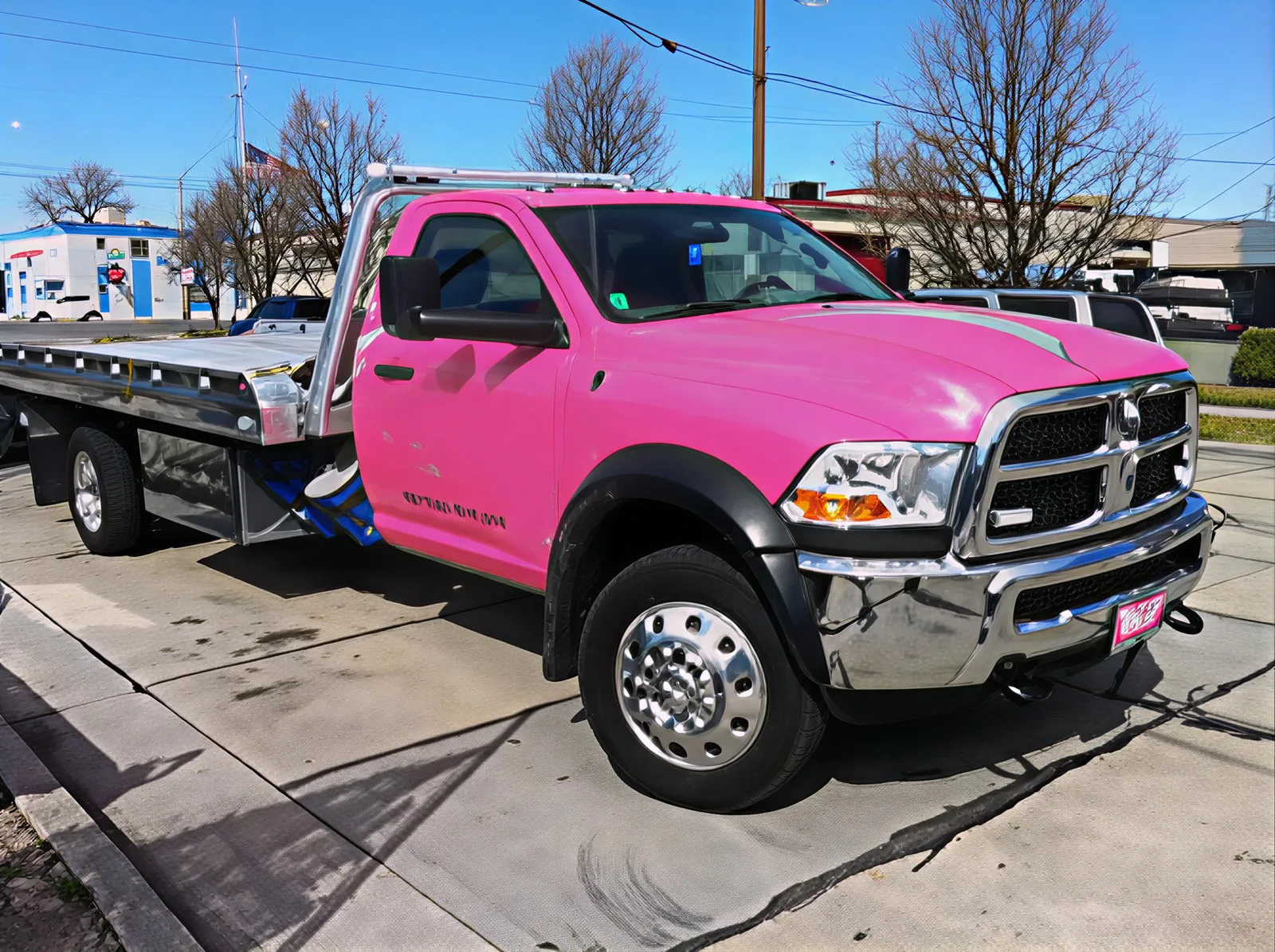
One call reaches a live dispatcher who settles the price before anything moves and sends a pink flatbed you will spot from the far end of the lot.
(321) 728-1869Rather type it out? Send the details to dispatch or see the pink fleet at work.