
Rachel’s Towing & Recovery · 24/7 Dispatch
One Road On, One Road Off, and You Are Stopped on It.
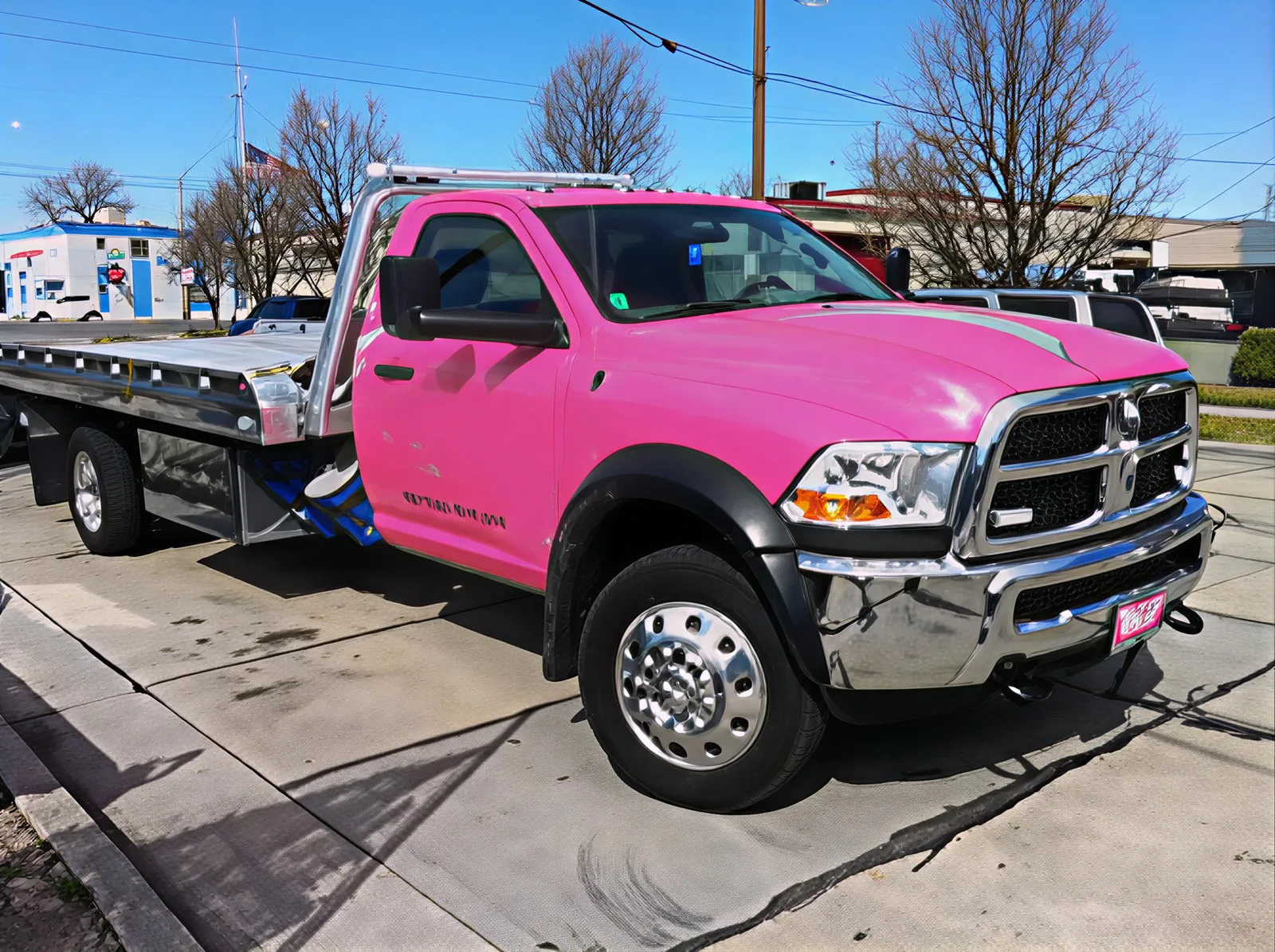
A1A is the only real way through this island, so a stalled car here is everybody’s problem within about ninety seconds. Call, tell a live dispatcher what you can see, and get a pink truck moving toward you while you are still on the line.
(321) 728-1869 a person answers, any hour
Cocoa Beach, FL
The First Five Minutes Matter More Than the Tow Does.
Before anything else: if the car will still move under its own power, get it off the travel lanes. A parking lot apron, a side street, a wide spot near a beach access, anywhere the traffic is not. If it will not move and you are sitting in a live lane, call 911 before you call us. Police can shut a lane down. A tow truck cannot, and neither can you.
Hazards on the moment you stop. If you are on a real shoulder and traffic is moving past at speed, the safest place for everyone is belted inside the vehicle with the doors closed. If you are somewhere you can get clear of the roadway entirely, get out on the side away from traffic and put a barrier, a guardrail, a curb line, the dune walkover, whatever exists, between your family and the cars. Anybody hurt at all means 911 first, tow second.
Then call. You will hear a price on that same call before anything rolls, and you will hear it once, not again at the curb.
Half the People Who Call From Here Cannot Say Where They Are.
That is not a criticism. Cocoa Beach fills with people who arrived yesterday, and street names do not stick in twenty-four hours. Do not waste time trying to sound like a local. Tell dispatch what you can see out the window.
The hotel sign. The restaurant on the corner. Whether the ocean is on your left or your right, which alone narrows it down to a direction of travel on A1A. The number on the beach access ramp. A dropped pin texted over beats all of it.
The island helps here in one way: it is long and thin. Water on both sides means there are not many places you can be. A driver who knows he is heading north of the Minutemen Causeway and looking for a silver sedan with hazards flashing near a specific hotel will find you. A driver working from “somewhere on the beach” will drive past you twice.
A dispatcher who asks four questions is not stalling. Those four answers decide which truck leaves.
Rachel’s Towing & RecoveryWhy a Turnaround Day Changes Everything About Your Wait.
On heavy cruise days the north end of the island and the roads feeding the port carry far more traffic than they were built for, and it does not clear quickly. Rental cars, shuttles, and people running late all stack up on the same pavement. A breakdown on those days is worse in two ways: the road behind you fills faster, and the truck coming to you sits in the same line everybody else is in. Dispatch quotes the honest number instead of the comfortable one, with a call back if it moves.
You can help the number. If your car is somewhere legal and out of the traffic, say so. If you are in a lane, if there are kids in the car, if somebody has a medical condition and the air conditioning is dead, say that too. It moves you up the board.
After Dark, the Side Streets Get Very Quiet.
A1A stays lit and busy well into the evening. Two blocks off it, the picture changes. The streets running toward the river and the short ones ending at beach ramps go dark and empty, and a person standing beside a stopped car out there is more alone than visitors expect.
The advice is boring and it is correct: stay in the vehicle, doors locked, hazards running, and wait. Do not start walking toward the lights on A1A to get a better signal. Keep the phone on the dispatcher’s number rather than burning battery on anything else, and if the wait stretches, call back rather than sitting there guessing.
Blowing sand adds one wrinkle nobody expects. On a windy night the sand across the pavement near the ramps hides where the shoulder ends. If the wheels spin when you try to reposition, stop trying and tell dispatch.
What to tell dispatch, in this order
- The road and the nearest mile marker or cross street.
- Whether you are off the pavement or still in a live lane.
- Year, make, model, and whether the wheels turn.
- How many people are with the vehicle.
Storms Come Off the Water Fast, and They Come From Behind You.
Summer afternoons here, a cell can go from a dark smudge over the ocean to zero visibility and horizontal rain in under ten minutes. If you are already stopped when that arrives, the calculation changes. The streets near the river hold water, and the drivers passing you can no longer see your hazards from any distance at all. Get in the car, belt in, hazards on, and wait it out rather than standing on the shoulder being a target nobody can see. Call while you wait so the run is already on the board when it clears.
If water has come up over the bottom of the doors, do not try to restart the engine. A motor that stalled in water may have pulled water into the intake, and cranking it is how a repair bill becomes a replacement bill. Tell dispatch the car went through water and the driver arrives ready to load it cold, no key turned.
What Dispatch Asks, and Why Each Question Earns Its Place.
Where you are decides the route and how the truck stages. What happened decides whether this is a tow at all. What you drive decides the equipment. Who is with you decides how the call is sequenced against the others already running.
- Is anybody hurt, and have you already called 911?
- Are you in a lane of traffic, on a shoulder, or off the road entirely?
- What is the nearest thing you can see with a name on it?
- Year, make, and color, and does it roll and steer?
- Where does the vehicle need to end up when it leaves?
That last one matters more than people expect. A destination named on the first call is a destination the price is built around.
Different Trouble, Different Number on the Board.
Not everything that stops a car here is a tow. A dead battery, a flat, keys locked inside, or an empty tank is roadside work, and sending a big truck for it would be charging you for equipment you did not need. If metal met metal, accident and collision towing runs off the same board with no second call. Two wheels get their own straps through motorcycle transport, and anything heavier than a pickup moves on the heavy fleet.
You do not have to pick correctly before you call. Describe what is in front of you and dispatch sorts it, whether the answer ends up being the everyday tow or the flatbed. The wider picture for this end of the county sits on the Cocoa Beach coverage page, how urgent calls run is on the emergency towing page, and the gallery shows the trucks that actually turn up. Rather type than talk? Send dispatch the details.
Stopped on A1A or a dark beach street? Somebody is awake right now.
(321) 728-1869Asked From the Shoulder, Usually in a Hurry.
If yours is not below, the fastest answer is a human one. Call and ask, whatever the hour.
(321) 728-1869I am a visitor and I genuinely do not know where I am. What do I tell you?
Should I stay in the car or get out on A1A?
A storm just came in off the ocean and I am stopped. Do I wait it out?
Do cruise turnaround days change how long I wait?
My car is stuck in soft sand at a beach access. Is that still an emergency call?
Is anyone actually awake at three in the morning?
Get Safe First. Then Get Us Moving.
Off the lanes if you can, hazards on, everybody clear of traffic. Then one call reaches a live dispatcher who settles the price, tells you what is coming, and puts a pink truck on the road toward you.
(321) 728-1869Not an emergency? Send dispatch the details or look through the pink fleet at work.