
Rachel’s Towing & Recovery · 24/7 Dispatch
Twenty-Two Miles South, and We Will Tell You So.
The yard is up in Palm Bay and Melbourne, so this is a run down US 1 rather than a truck two streets over. Call, hear the honest arrival time, and decide with real information instead of a guess.
(321) 728-1869 answered live, day and night
Sebastian, FL
If You Are In Real Danger, Take Whoever Gets There First.
That sentence costs us work and it is still the right advice. The trucks live about twenty-two miles north of here. Most days that is a straightforward run down US 1 and the wait is reasonable. But an emergency page that pretends distance does not exist is lying to somebody who is scared.
So here is the honest version. If anyone is injured, if your car is sitting in a lane with traffic moving around it, or if water is coming up, call 911 first and then call whichever tow company can reach you soonest. That might be us and it might not be. Nobody at this end will be offended. The point of the call is that you stop being in danger, and a truck that is twenty minutes closer is worth more than loyalty to a phone number.
Everything below is for the other situation, which is most of them. The car is off the road, nobody is hurt, and what you actually need is a real arrival time and a price you can trust. That we can give you on the first call.
What the Run Down US 1 Actually Looks Like.
Dispatch quotes the road as it is at that hour rather than a comfortable number. Overnight the run is quick, because US 1 is empty the whole way down and nothing slows a truck. Weekday afternoons take longer. Seasonal traffic through the winter months adds to it, and so does anything happening on the corridor between here and the yard.
You will hear that number before you commit to anything, and you will hear the price for the run at the same time. Both are quoted out loud, on the first call, by a person and not a menu. If the honest answer is longer than you want, you get to make a different choice with full information, which is the whole point of saying it.
Where you are also matters. A call from the north side, closer to the county line, is a shorter run than one from the far side of town or out toward the water. Say roughly where you are early and the number gets more accurate.
We would rather you call from behind a guardrail two minutes late than from the fast lane right now.
Rachel’s Towing & RecoveryWhile You Wait, Where You Stand Is the Whole Question.
The basics do not change with distance. Hazards on the moment something feels wrong, and if the car still has roll left in it, spend that getting off the travel lane and onto ground with room beside it. There are plenty of places to do that on the surface roads around here if you act in the first few seconds.
Once stopped, everyone gets out through the doors on the side away from traffic, walks back behind the car, and stands well off the pavement. Behind the vehicle, never in front of it, and never in the gap between the car and a guardrail. If the spot you landed in has no room to do any of that, or you are still in a live lane, the answer flips: stay belted inside with the hazards flashing and call 911 first. A car with flashers is a much larger and more visible thing than a person standing at the edge of a road.
Do not walk US 1 to reach a gas station or a lit parking lot. It looks walkable and it is not, particularly after dark. Wait where you are safe and let the truck come to the car.
Boats, Trailers, and the Ramp Road at Dawn.
A good share of the trouble around here happens with something hitched behind. A tow vehicle that quits on the way to the inlet, a trailer bearing that goes on CR 512, a rig that will not restart in a ramp lot at six in the morning. Those are different jobs from a car by itself and they need saying up front.
Tell dispatch what the tow vehicle is, what the trailer is carrying, whether the whole rig is clear of the pavement, and whether you can safely unhitch where you sit. Never unhitch in a travel lane. A rig takes more room to work and sometimes takes two moves, and a driver who knows all that before he leaves brings the right truck the first time.
- Whether anyone is hurt and whether traffic is moving past you in a live lane.
- Road name, direction of travel, and the last intersection or landmark you passed.
- A dropped pin by text, which is worth more than any description, especially on the darker roads.
- Year, make, color, and whether the vehicle still rolls and steers.
- Anything hitched behind you, and what it is carrying.
What to tell dispatch, in this order
- The road and the nearest mile marker or cross street.
- Whether you are off the pavement or still in a live lane.
- Year, make, model, and whether the wheels turn.
- How many people are with the vehicle.
Storm Weeks Cut a Long Run Shorter.
Distance matters most when the weather turns. A twenty-two mile run can be stopped by conditions in the middle of it just as easily as by conditions where you are standing, and you will be told that plainly rather than left watching the road for a truck that is not coming.
Two rules hold no matter who is coming to get you. Do not crank an engine that stalled in standing water, because that is how a repair becomes an engine replacement. And never sit in a vehicle with water rising around it waiting on a tow. Get out, get to higher ground, call 911. Once the water is gone and the car is stranded rather than surrounded, it becomes an ordinary recovery, and that is a call we are glad to take.
Plenty of These Turn Out to Be Smaller Jobs.
Not every call from down here needs a wrecker. A dead battery, a flat, an empty tank, or keys locked inside is roadside work, done where the vehicle sits, and you drive away yourself. If two vehicles made contact, accident and collision towing runs off the same board with no second call. A bike needs its own straps through motorcycle transport, and anything past pickup weight belongs to the heavy fleet.
A car that simply quit somewhere safe is a standard tow. Drivetrain or clearance reasons for keeping all four wheels off the ground point at the flatbed. You do not have to work out which one applies. Describe what happened and dispatch assigns the truck. Everything we run this far south is on the Sebastian coverage page, the service is laid out on the emergency towing page, and the gallery shows the trucks that make the drive. If you would rather type it out, send dispatch the details.
Want a real number before you wait? Ask for it.
(321) 728-1869Straight Answers About the Drive South.
Not here? A dispatcher can answer it in ten seconds. Call at any hour.
(321) 728-1869You are up in Brevard. Should I even be calling you in an emergency?
What does dispatch mean by a live lane, and why does it change the advice?
I am towing a boat and the tow vehicle quit on CR 512. Can you handle both?
Roseland Road at night is dark and I cannot see anything to name. What helps?
Storm coming in and my car is dead. Is there a point where you will not come?
Is somebody actually picking up the phone in the middle of the night?
Safe First. Then the Honest Number.
Anyone hurt or a car in a live lane means 911 comes first. After that, a live dispatcher gives you a real arrival time from the Palm Bay yard and the price for the run before a truck rolls.
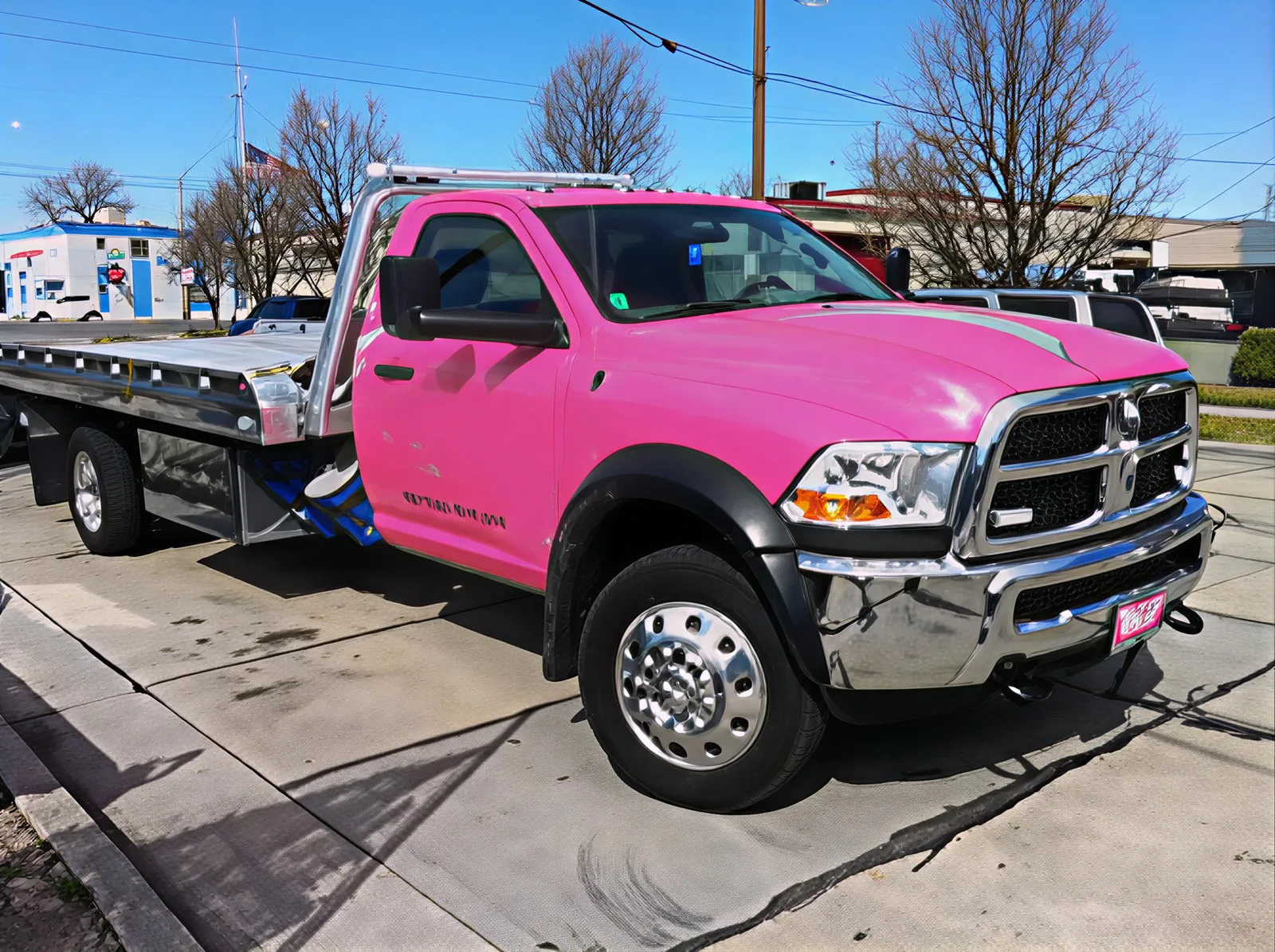
(321) 728-1869Nobody in danger? Send dispatch the details or look through the pink fleet at work.