
Rachel’s Towing & Recovery · 24/7 Dispatch
A Small Town Where One Stopped Car Blocks Everything.
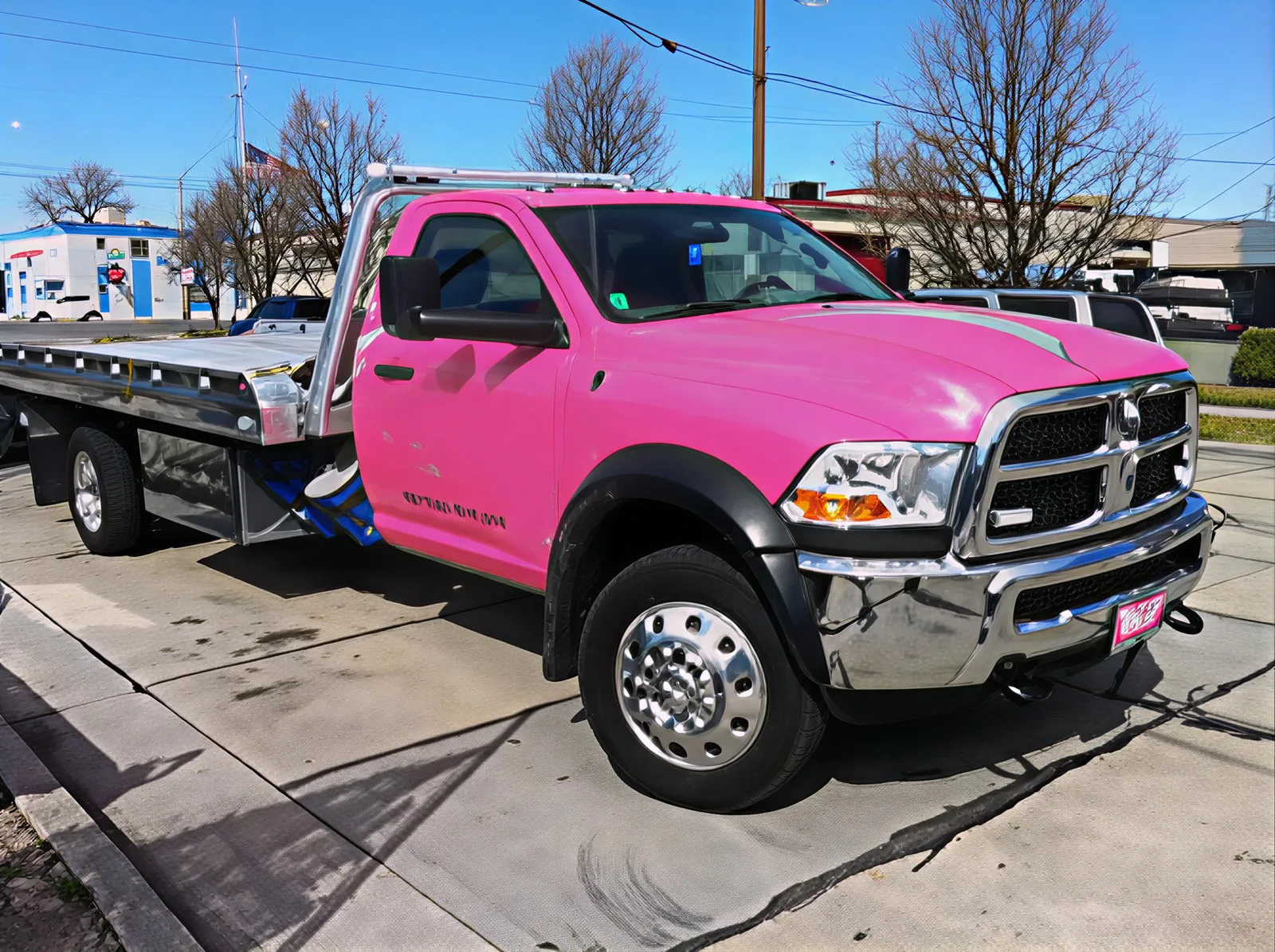
The causeway lands here and the streets get narrow fast. If you are stalled somewhere you should not be, call a live dispatcher, get told what to do right now, and have a pink truck already heading over the bridge.
(321) 728-1869 a real person, every hour
Indialantic, FL
Where the Bridge Comes Down Is the Worst Place to Stop.
The east landing of the Melbourne Causeway is a pinch point, and drivers arriving off the bridge have speed and less room to react than they think they do. A car stopped there is not an inconvenience, it is a hazard, and it should be treated like one from the first second.
Hazards on before anything else. If the car will still roll, get it out of the through lanes, even if that means only reaching a turn lane or a lot entrance. If it is dead in a lane cars are using, dial 911 first. Police can shield the scene and slow traffic. A tow truck cannot do either from four miles away, and neither can you standing in the road.
Once 911 knows, get everyone out on the side away from traffic and move back from the roadway, behind a curb, a railing, a wall, whatever is there. The car is insured. If instead you are on a shoulder or in a lot with traffic passing at speed, the safer choice is usually to stay belted inside with the doors closed. Anybody hurt at all, that is a 911 call before it is a tow call.
Both Curbs Full, and Suddenly Nobody Moves.
Off the main roads this town runs on short streets with cars parked along both sides. There is room for one lane of moving traffic and that is it. When a car dies on one of those blocks, the whole street stops with it. Within a few minutes there are neighbors, a delivery van, and somebody trying to back out of a driveway all involved in your problem.
Say that on the phone. A vehicle blocking a residential street moves up the board over one sitting harmlessly in a lot. Also tell dispatch how much room is beside the car and whether there is a corner or a driveway apron nearby, because that is what the driver is planning around while he crosses the causeway.
What not to do is try to muscle it into a gap by hand. Pushing a car with no power steering and no brake assist on a street with parked cars either side is how somebody’s leg gets caught between two bumpers. Leave it. The truck will deal with it.
We would rather you call from behind a guardrail two minutes late than from the fast lane right now.
Rachel’s Towing & RecoveryThe Low Spots Fill Faster Than You Would Believe.
Summer storms here can dump an inch of rain in twenty minutes, and there are streets in this town where the water goes from a puddle to a foot deep in the time it takes to drive two blocks. Standing water always looks shallower than it is, especially at night, and it is the single most common reason a good car stops working on a beachside street.
If your engine quits in water, leave the key alone. Cranking a motor that took water into the intake turns a repair into a replacement. Say the words “went through water” to dispatch and the driver arrives ready to load it cold.
The more important part is you. If water is rising around the vehicle, or moving at all, get out and get to higher ground away from the car, then call 911. Do not sit in a car waiting for a tow while water climbs the doors. That decision has killed people in this state, and no vehicle is worth it.
Visitors Do Not Know Where They Are, and That Is Fine.
Plenty of the calls from here come from people who are staying a week or came over for the afternoon. They cannot name a single street, which is normal and costs nothing as long as they describe what they can see instead of guessing at street names.
- The nearest business, condo name, restaurant, or park sign.
- North or south of the causeway, and how far from the ocean.
- Which direction you were driving when it quit.
- Anything unusual in sight: a school, a bridge, a beach walkover.
- Better than all of it, a dropped pin sent by text.
The town is small. Two decent landmarks and a vehicle description put a driver on you without any hunting around.
What to tell dispatch, in this order
- The road and the nearest mile marker or cross street.
- Whether you are off the pavement or still in a live lane.
- Year, make, model, and whether the wheels turn.
- How many people are with the vehicle.
Overnight and On the Phone the Whole Time.
After the restaurants close, the beachside goes quiet. That works in your favor for arrival time, because the causeway run is clean when the road is empty, and it works against you if you are outside the car. Stay in the vehicle, doors locked, hazards on, phone charged if you have a cable.
A live dispatcher answers at every hour, including the ones nobody chooses. You get asked where you are, what happened, who is with you, and what you drive. You get told which truck is coming and roughly when. You get the price on that call, before anything leaves the yard, and that price is what shows up on the invoice.
Some Calls Route Somewhere Else Entirely.
A dead battery, a flat, an empty tank, or keys locked in the car is roadside work and gets you back on the road faster than a tow would. If there was an impact of any kind, accident and collision towing runs off the same board with no second call. Bikes get their own straps and technique through motorcycle transport, and anything above pickup weight belongs to the heavy fleet.
If nothing about your situation is urgent, the everyday tow is the page for it, and drivetrain reasons to keep all four wheels up point at the flatbed. You do not have to choose. Say what happened and dispatch chooses. Everything covered on this side of the river is on the Indialantic coverage page, the service is described on the emergency towing page, and the gallery shows the trucks that turn up. Prefer typing? Send dispatch the details.
Blocking a street or stopped at the causeway landing? Call now.
(321) 728-1869The Ones We Hear With Traffic in the Background.
Not covered below? A person answers faster than a page can. Call, whatever the hour.
(321) 728-1869My car died right where the causeway comes down. Is that dangerous?
I am blocking a street and neighbors are stacking up behind me. What now?
The street is flooding fast. Should I stay with the car?
I am visiting and I do not know any street names here. How do I describe where I am?
Can a tow truck even get down my street with cars parked both sides?
Does somebody actually answer at four in the morning?
Off the Lanes, Then On the Phone.
Get people clear of traffic first. Then one call reaches a live dispatcher who settles the price, tells you what is coming, and sends a pink truck across the causeway toward you.
(321) 728-1869Nobody at risk? Send dispatch the details or browse the pink fleet at work.