
Rachel’s Towing & Recovery · 24/7 Dispatch
Some Breakdowns Happen Where You Cannot Pull Off at All.
A bridge deck, an approach ramp, the middle of 520 on a busy afternoon. Call a live dispatcher, get told what to do in the next minute, and have a pink truck already routing toward the right crossing.
(321) 728-1869 answered live, day and night
Merritt Island, FL
A Bridge Deck Is the One Place With No Escape.
Almost everywhere else, a dying car has options. You coast to a curb, a lot, a swale, a side street. On a causeway span there is a lane, a narrow edge, a rail, and water. That is the whole list, and it is why a breakdown on a crossing gets treated differently from every other call on this island.
If the engine starts to go while you are still climbing or crossing, do not wait to see whether it recovers. Hazards on and keep whatever momentum you have, aiming for the far end and any ground with a real shoulder. Coasting three hundred more feet can be the difference between a routine hookup and a scene with police cars in it.
If it stops on the span, call 911 first. Traffic behind you cannot see far enough ahead on a bridge and there is nowhere for it to go once it does. Police can slow and shield the lane. Follow what the responding officer tells you about staying in or leaving the vehicle. On a narrow deck with no shelter, staying belted inside with hazards flashing is often safer than standing out on the edge. Anyone hurt makes it a 911 call first, always.
Wind Off the Water Changes the Math.
The crossings here are exposed in a way the inland roads are not. On a gusty day the wind comes straight across with nothing to break it, which matters for two reasons people underestimate.
The first is footing. Standing near a rail on an open span with gusts pushing at you is genuinely hazardous, and it gets worse if you are holding a door or a child’s hand. The second is visibility. A person on foot is far harder to pick out at speed than a stopped car with hazards running, and drivers crossing a bridge are watching the lane ahead, not the shoulder.
So unless police direct otherwise or the vehicle is somewhere it cannot stay, the answer out there is usually to stay inside with the doors closed and let the truck and the officers do their jobs. Tell dispatch it is windy and where exactly you are. That is not small talk, it changes how the driver stages the truck when he arrives.
Getting off the road first is not us being careful. It is the only part of this you control.
Rachel’s Towing & RecoveryNaming the Crossing Cuts the Search in Half.
Water on both sides makes this island easy to describe if you use the right landmarks. The most useful sentence you can say is which crossing is nearest and which way you were driving. That alone narrows things enormously, and it tells the driver which route to take, since coming at you from the wrong side can cost real time.
- Nearest bridge or causeway, and whether you were headed east or west.
- The closest business, shopping center, or subdivision entrance in sight.
- Whether you are on the span, an approach, or past it on regular road.
- Year, make, color, and whether it still rolls and steers.
- A dropped pin by text if you can manage it, which beats all of the above.
Dispatch would rather spend twenty seconds getting you pinned exactly than send a driver up and down 520 looking for a silver sedan.
Beach Traffic and Shift Traffic Do Not Overlap.
Two very different rushes run through here. Weekend and holiday afternoons load the 520 corridor with people heading for the beaches and coming back, and it stays loaded for hours rather than minutes. Separately, the space center shift changes put a lot of cars on the roads at fixed times on ordinary weekdays, and those windows are sharp: light, then heavy, then light again.
Both affect what an honest arrival window looks like, and dispatch quotes the road as it actually is at that hour. If your car is somewhere legal and safe, a longer wait costs patience and nothing else. If you are exposed on a shoulder or blocking a lane, say so and the run climbs the board ahead of the ones that can sit.
Shift schedules cut the other way too. If you cannot be with the car because you are badging in, that is workable. Name the person meeting the driver, give a number that will be answered, and say where the keys will be.
What to tell dispatch, in this order
- The road and the nearest mile marker or cross street.
- Whether you are off the pavement or still in a live lane.
- Year, make, model, and whether the wheels turn.
- How many people are with the vehicle.
The Storm-Week Rule Everyone Here Already Knows.
Living between two rivers means a few weeks a year where the crossings decide everything. When wind gets high enough, bridges close, and until they open again nothing moves on or off, tow trucks included. That is worth planning around rather than discovering.
If a storm is coming and your car is already unreliable, deal with it on the front end of the week. If it is parked somewhere low, move it. During the event, dispatch will tell you plainly if a run cannot be made instead of leaving you waiting on a truck that was never going to reach you, and once the roads reopen the board runs on who is in danger, not who called first.
When the Call Belongs to a Different Truck.
A battery, a flat, an empty tank, or keys locked inside is roadside work, and it gets you rolling sooner and cheaper than a tow. If there was any impact, accident and collision towing runs off the same board with no second call. A bike takes its own straps and technique through motorcycle transport, and anything past pickup weight goes to the heavy fleet.
If your day is bad but nothing about it is dangerous, the everyday tow covers it, and drivetrain reasons for keeping all four wheels off the ground point at the flatbed. You do not need to sort that out yourself. Describe what happened and dispatch picks the truck. Everything we run on this island is on the Merritt Island coverage page, the service is laid out on the emergency towing page, and the gallery shows the equipment. If typing suits you better right now, send dispatch the details.
Stopped on a causeway or stuck on 520? Somebody is awake.
(321) 728-1869Asked From Between the Two Rivers.
Not here? A dispatcher can answer it in ten seconds. Call at any hour.
(321) 728-1869My car quit on the causeway itself. What do I do first?
Wind is pushing the car around out here. Should I get out?
Traffic is heavy on 520 heading to the beaches. How much does that add?
My shift lets out at a set time and I cannot be there. Can somebody else meet the driver?
Do you need to know which bridge I am near?
Is a person answering the phone in the middle of the night?
Past the Span If You Can. Then Call.
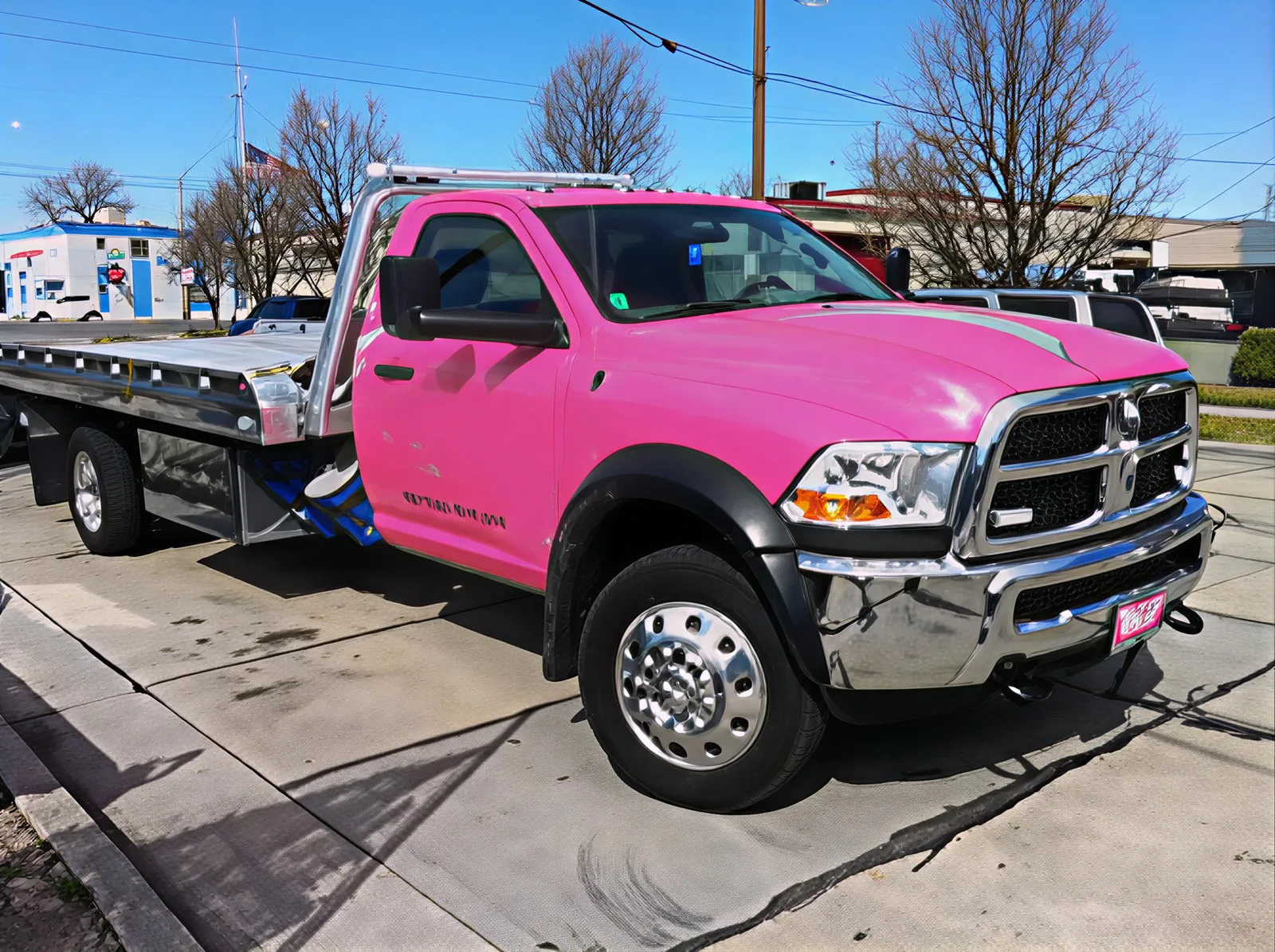
A live dispatcher takes the crossing, the direction, and who is in the car, quotes the run before it leaves the yard, and sends something bright pink you will spot from a long way off.
(321) 728-1869Nobody in danger? Send dispatch the details or look through the pink fleet at work.