
Rachel’s Towing & Recovery · 24/7 Dispatch
New Roads, Fast Ramps, and Not Much to Point At.
Stopped on the 191 ramps with cars merging behind you, or sitting somewhere on Stadium Parkway with nothing nameable in sight. Call, hear what to do right now, and send a pin while a pink truck rolls.
(321) 728-1869 answered live, day and night
Viera, FL
The Ramp Is Worse Than the Interstate Itself.
People assume the highway is the dangerous part. On the ramps at exit 191 the danger is different and in some ways sharper. A driver coming up an on-ramp is accelerating with his head turned left, hunting for a gap in traffic, and the thing he is least prepared to find is a stationary car in front of him. That is the exact situation a breakdown on a ramp creates.
So the priority in the first few seconds is distance and visibility. Hazards on the moment something goes wrong, before you have even worked out what it was. If the car still has roll in it, keep steering right and use every foot you have to reach the widest part of the shoulder available. A hundred extra feet is worth more than anything you can do standing still.
Once you have stopped, look at what is beside you. If there is real ground, everybody gets out through the doors on the side away from traffic, walks back behind the car, and moves up the embankment well off the pavement. Behind the vehicle, never in front of it, and never wedged between the car and a guardrail where nothing can move. If the ramp is narrow and there is nowhere to go, stay belted inside with hazards on and call 911 first. Anyone injured makes 911 the first call regardless.
Four Lanes and a Driveway Every Two Hundred Feet.
Wickham Road is a different kind of problem. It is wide and it moves, and it is also lined with entrances into plazas, offices, and neighborhoods, which means drivers are constantly slowing, turning, and looking sideways for a gap. A car that quits in a through lane or a turn lane there gets found late by people who were watching for a driveway instead.
The upside is that all those entrances give you somewhere to go. If the car will roll at all, a parking lot is usually within reach, and being in a lot instead of a lane changes the whole call from urgent to routine. Take the driveway.
What you should not do is get out and walk along that road, or cross it on foot to reach a shopping center. It looks crossable between light cycles and it is not, particularly at dusk. If you cannot move the car and you are in a live lane, that is a 911 call first and then dispatch, and you wait belted in with the hazards going.
A dispatcher who asks four questions is not stalling. Those four answers decide which truck leaves.
Rachel’s Towing & RecoverySome People Calling Here Have an Appointment Clock Running.
The medical campus means a share of these calls come from someone who is not simply inconvenienced. They are due somewhere at a specific time, or they are driving someone who is. That is worth saying out loud at the start of the call rather than hoping it works out.
If there is a real clock, dispatch will tell you honestly whether the truck can beat it. Sometimes the right move is getting the people to where they need to be by other means and letting the car wait, and you will hear that suggestion rather than sit there watching the time. Priority on the board is set by exposure and by genuine urgency, not by who dialed first.
One line worth being clear about. If someone in the car is having a medical problem right now, that is 911 before it is anything else. A tow truck is the wrong kind of help for that, and the two calls do not compete for the same phone.
Out on the Parkway, Send a Pin.
Stadium Parkway and the newer stretches around it are pleasant to drive and genuinely hard to describe. Long runs with no businesses, few signs worth naming, and subdivision entrances that resemble each other from the road. People end up saying “I am on the road with the trees” and everybody loses ten minutes.
The fix takes ten seconds. Text a dropped pin. Dispatch confirms it on the map while you are still on the phone and the driver goes to a coordinate instead of a description. If sending a pin is not workable, the next best thing is the direction you were driving, the last intersection you passed, and roughly how long ago you passed it.
- Whether anyone is hurt and whether traffic is moving past you in a live lane.
- A dropped pin, or the last intersection plus your direction of travel.
- Subdivision name and the road you entered from, if you are inside one.
- Year, make, color, and whether the car still rolls and steers.
- Whether the car is in a garage, a driveway, or on the street, which changes which truck comes.
You will hear the price for the run before a truck leaves the yard, and an arrival window that accounts for the actual traffic rather than a hopeful one.
What to tell dispatch, in this order
- The road and the nearest mile marker or cross street.
- Whether you are off the pavement or still in a live lane.
- Year, make, model, and whether the wheels turn.
- How many people are with the vehicle.
Not Every Bad Afternoon Needs a Wrecker.
A fair number of these calls end without a tow. A dead battery, a flat, an empty tank, or keys locked inside is roadside work, done where you sit, and you drive off yourself. If two vehicles made contact, accident and collision towing runs off the same board with no second phone call. A motorcycle needs its own straps and technique through motorcycle transport, and anything past pickup weight goes to the heavy fleet.
If the car quit somewhere safe and the day is just ruined rather than dangerous, that is a standard tow. If the drivetrain or the clearance means all four wheels need to leave the ground, dispatch sends the flatbed. Sorting that out is not your job. Say what happened and the right truck gets assigned. Everything we run through this part of the county sits on the Viera coverage page, the service is laid out on the emergency towing page, and the gallery shows what will be pulling up. If typing is easier right now, send dispatch the details.
Stopped on a ramp, a parkway, or in a lot? Somebody is awake.
(321) 728-1869The Ones That Come In From This Side of I-95.
Not here? A dispatcher can answer it in ten seconds. Call at any hour.
(321) 728-1869I coasted onto the ramp at exit 191 and cars keep coming up behind me. What do I do?
On Stadium Parkway there is nothing around me to describe. How do I tell you where I am?
I broke down driving someone to a medical appointment. Does that change your priority?
My car stopped in a turn lane on Wickham Road at rush hour. Can I leave it and walk?
A storm came through and my engine died where water was standing. Do I restart it?
Do the newer subdivisions confuse drivers looking for me?
Get Off the Ramp, Then Send Us a Pin.
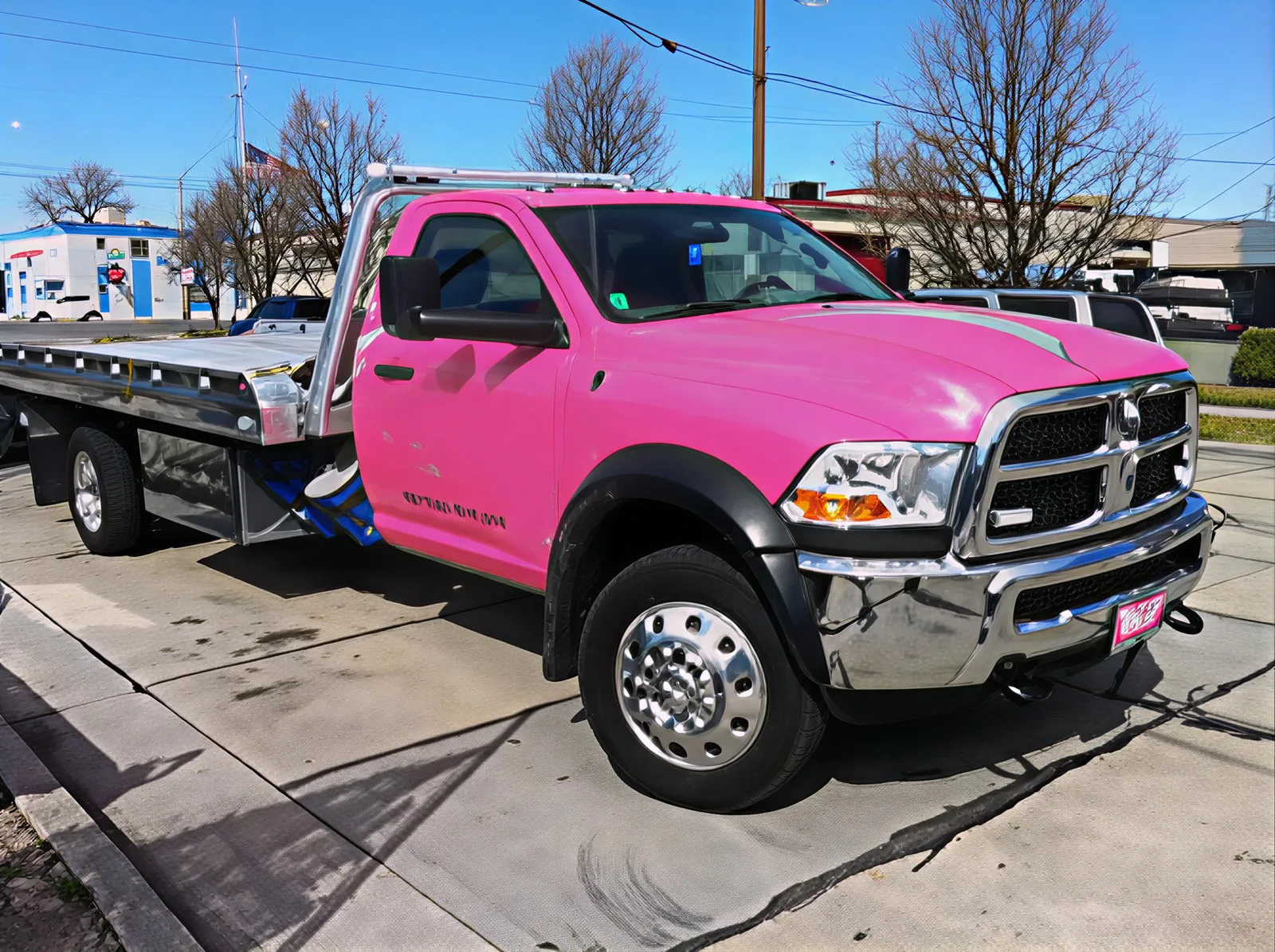
A live dispatcher takes the location, who is with you, and whether the day has a clock on it, quotes the run before it leaves the yard, and sends something bright pink you will spot from a long way off.
(321) 728-1869Nobody in danger? Send dispatch the details or look through the pink fleet at work.