
Low Cars, Long Overhangs, and Why the Loading Angle Matters
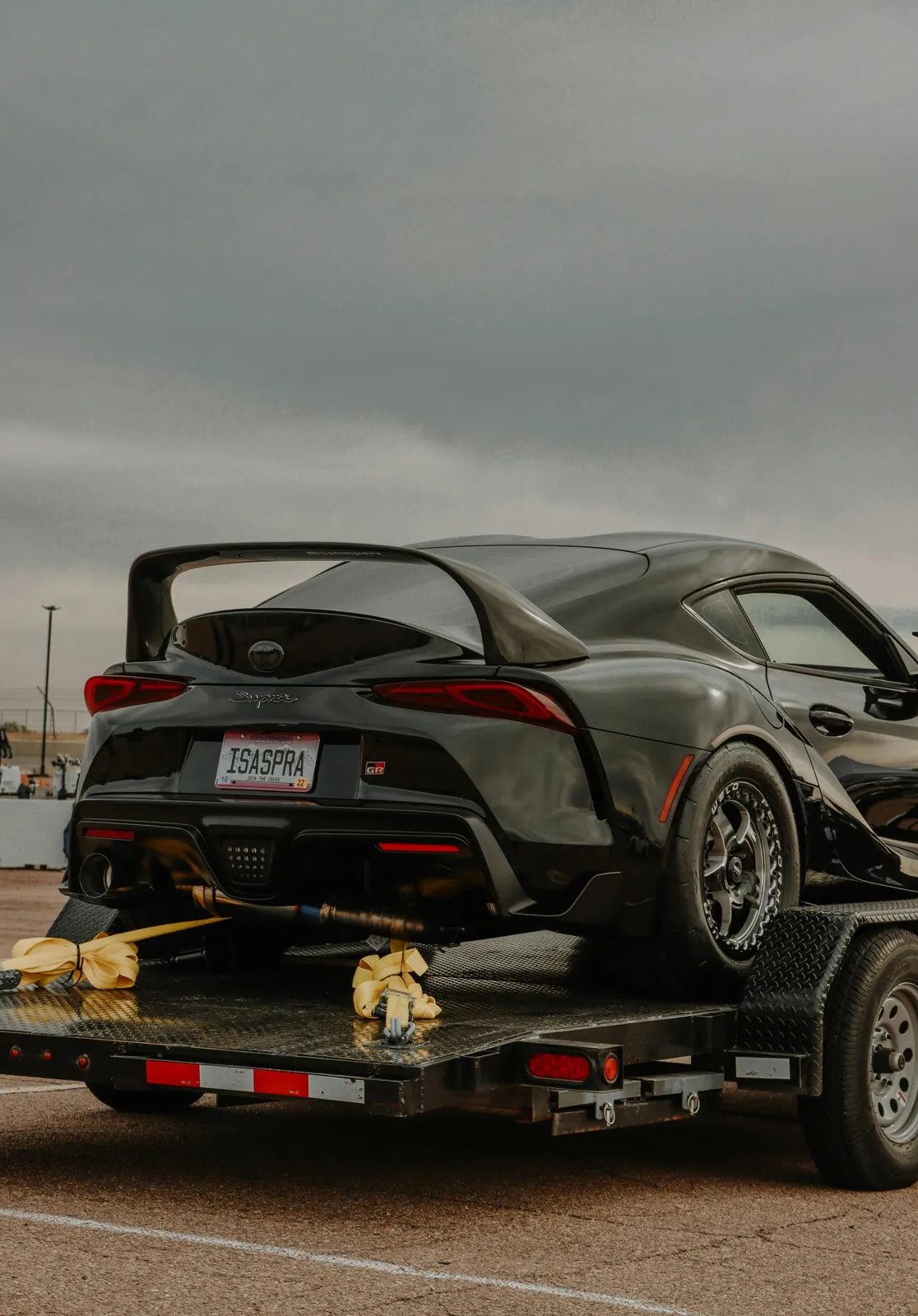
A lowered car, or one with a long front overhang, can scrape its splitter or bumper on a tow deck before the front wheels ever reach the incline. The fix is geometry: a low deck angle, boards or low ramps under the front tires to raise the nose, and a slow winch pull. The car is secured with soft straps through or over the wheels, never hooks on the suspension. Tell dispatch the ride height before a truck rolls.
Owners of low cars already know the sound. A driveway lip, a parking stop, a speed bump taken a touch too quickly, and the front of the car lets you hear about it. A tow deck is one more incline, and usually a steeper one than anything you drive over.
The scrape owners dread tends to happen in the first few feet of loading, long before the car reaches the road. This post is about those few feet, and about what you can tell dispatch so the truck arrives set up for them.
Approach angle, in plain terms
Picture the front of the car and the incline as two lines. The approach angle is the steepest slope the car can meet before something other than the tires touches it. On a stock sedan that angle is generous. On a lowered car, a sports car, or anything wearing a front spoiler, it can be very shallow.
A tilted flatbed deck has its own angle where its tail meets the ground. If that slope is steeper than the car’s approach angle, the bumper touches before the tires start to climb. Keep pulling and the lip folds, or the bumper cover tears away from its clips.
Two things lower the effective angle. One is a deck that tilts low with a long tail. The other is lifting the car’s front wheels onto something before the incline begins, so the car effectively starts higher off the ground. A careful driver does both when a car calls for it, and looks at the gap under the nose before pulling instead of hoping.
The rear matters too. As the car crests the hinge where the deck bends, a long rear overhang or a low exhaust can drag across it.
Splitters, lips, and long bumpers
Aftermarket parts change the math more than anything. A front splitter sticks forward and sits low, which makes it the first thing to meet any slope. Side skirts can catch the deck edge as the car levels out, and a rear diffuser or oversized exhaust tip can drag as the tail drops over the hinge.
Long factory bumpers are their own case. Some sedans and coupes carry a lot of body ahead of the front wheels, so even at stock height the nose reaches the deck before the tires do.
Wide wheels, low-profile tires, and big brake calipers come into play later, at the tie-down stage, since they leave less room around the rim for a strap to pass without rubbing.
If your car has any of these, a photo of the front end taken from the side at ground level tells the driver more than any description could. It shows exactly how much clearance there is to work with. And if the car only needs a jump or a tire, roadside assistance in Melbourne skips the deck entirely.
Straps through the wheels, never hooks on the suspension
Older tie-down habits put chains and J-hooks on control arms, axles, or frame points. On many modern and performance cars those parts are aluminum or carry thin brackets, and a hook cinched tight over a bump can bend them. On a lowered car there is often no way to reach a frame point without touching the body.
Soft tie-downs solve that. A strap loops through the wheel spokes or over the tire, and a ratchet pulls the tire down onto the deck. The car’s suspension keeps moving the way it was designed to, while the wheel itself stays locked in place. Nothing metal touches the paint or the chassis.
Wheel nets do the same job on cars where a strap through the spokes would rub the rim or the caliper. The driver picks the method after looking at the wheels, and it can differ front to rear on a staggered setup.
Ride height, air bags, and a car that will not shift
The call goes faster when you offer these before anyone has to ask.
Ride height, even roughly. Say whether the car is lowered, on coilovers, or on air suspension, and whether the air system still lifts. A car stuck at its lowest setting because the compressor quit is a different load from one that can raise itself for the trip.
Aftermarket parts, meaning the splitter, skirts, diffuser, big brakes, or wide wheels. Then the drivetrain. All-wheel drive rides with every wheel on the deck, so dispatch plans for that from the start.
Whether it rolls. A car in park with a dead battery, a locked electronic parking brake, or a flat tire changes how it gets onto the deck, and some cars need a specific procedure to reach neutral without power.
Where it is sitting. A garage at the top of a steep driveway or a parking lot with concrete wheel stops both affect how the car gets out before it ever reaches the truck. With that picture, dispatch sends a truck already set up for the car. Call (321) 728-1869, or send dispatch a side photo of the front end along with the details.
The one move that saves the bumper
Lift the front wheels before the deck tries to lift the bumper. That single step prevents more scraped splitters than anything else in this post.
In practice, the driver lays low ramps or sturdy boards at the foot of the deck and pulls the front tires up onto them first. That raises the nose at the exact point where it would otherwise touch. On a steep deck a second layer goes down, and a board at the hinge helps a long rear overhang clear.
Then the winch does the rest slowly, with the driver watching the gap under the bumper more than the winch. If the gap closes, the pull stops and the car rolls back to add height. Rushing that moment is how lips get torn.
It is a small step and an easy one to skip on a busy call, which is why it is worth saying out loud. When you book flatbed towing in Melbourne for a low car, tell dispatch it needs boards under the front tires, and the driver will know you have been through this before.
Low car questions we hear
Can a car on air suspension be towed if the air system failed?
Yes, but tell dispatch it is stuck low. The car will sit at its lowest height the whole time, so the driver plans for extra lift under the front tires and checks clearance along the full length before winching.
Is it safe to tow a car with an aftermarket front splitter still on?
Usually, with boards under the front tires and a slow pull. If the splitter comes off easily and you have the tools, removing it first takes the risk away completely. Either way, mention it on the call.
Where do the straps go on a car with big brakes?
Over the tire or through a wheel net, placed well away from the caliper and the face of the rim. The driver checks the spoke spacing before choosing a method, so nothing rubs or scuffs during the trip.
My car will not go into neutral with a dead battery. What happens?
Many cars have a manual release, and others need a little power to shift. Mention it on the call. The driver can often power the car long enough to reach neutral, and if not, the loading plan accounts for wheels that will not turn.
Low car, steep deck?
Most scraped splitters happen in the first three feet of the deck. Mention the ride height and the driver plans for those three feet.