
After the Bike Goes Down: Moving a Motorcycle That Took a Spill
Take care of the rider before the motorcycle, and call 911 if anyone is hurt. Once everyone is safe, resist the urge to ride a dropped bike away. Bent bars or levers, a twisted fork, a damaged brake line, or leaking fuel and oil can fail at the first corner or the first hard stop. Photograph the bike and the scene before it moves, then have it loaded by someone who can handle a bike that no longer rolls straight.
A tip-over in a parking lot and a slide across a lane at speed are different events. What they share is the moment right after, when the bike is on its side, adrenaline is high, and the quickest-looking answer is to stand it up and ride home.
Stop there for a minute. A motorcycle that went down can look almost untouched and still carry damage that only shows up when you ask it to brake or turn. The steps below are the order we would want any rider to follow.
The rider comes first, every time
Riders are famous for waving off help. After a spill, walking around feels fine because the body is flooded with adrenaline, and injuries to wrists, ribs, and heads can hide for a while before they announce themselves.
If there is any sign of injury, if the rider hit their head, or if the bike is lying in a live lane, call 911 first. We move the motorcycle once the people are handled, and nothing about the bike is urgent enough to change that order.
If nobody is hurt, get off the roadway. Leave the bike where it lies if lifting it means standing in traffic. Turn off the ignition, and close the fuel petcock if the bike has one, because a motorcycle on its side can leak fuel onto a hot engine. Keep your helmet and jacket on until you are well clear of the lane, since that gear is the only protection you have if a car drifts onto the shoulder. Then call, and let your hands stop shaking before anyone asks you to do anything technical.
Why riding it home is the risky choice
A spill tends to hit the same parts. The handlebar and levers take the first impact. A bent bar changes where your hands sit and how the bike answers the steering. A clutch or brake lever snapped short can leave you unable to stop cleanly, and foot pegs and the shift lever fold in or break off.
The damage you cannot see is the bigger worry. A front wheel that struck a curb can twist the fork tubes out of line with each other, so the bike pulls or wobbles under braking. A brake line rubbed through, a cracked reservoir, or a bent rotor all turn a hard stop into a guess. A cracked case can drip oil toward the rear tire, and fuel weeping from a damaged tank or line near a hot exhaust is a fire risk.
Riding a bike in that condition, even a short distance, puts the rider right back in danger minutes after walking away from the first incident. If there is fluid on the ground, a lever missing, or bars that no longer line up with the front wheel, the bike goes home on a truck.
Photos before anything moves
Before the motorcycle is lifted, pushed, or loaded, take pictures. Once it moves the scene is gone, and an adjuster working from your memory is working against you.
Start wide, shooting from off the roadway: the bike where it came to rest, the road surface, any scrape marks, the other vehicle if there was one, and a street sign or storefront that pins down the location. Then go close on the damage from both sides, including the bars, levers, fork legs, front wheel, tank, and exhaust.
If another driver was involved, photograph their plate and insurance card and get a name and phone number. If police respond, ask how to get a copy of the report. Add one more photo of the ground under the bike, because oil or fuel on the pavement is proof of damage that is easy to argue about later. Those pictures help the shop too, and they tell the driver exactly what is about to be loaded.
What gets checked before loading
When the truck arrives, the driver looks the bike over before it goes anywhere. The goal is to know what will hold weight during the lift and what will not.
Does the front wheel turn, or is it jammed against the fork or fender? Does the rear wheel spin, or has the chain come off and locked it? Is the side stand usable, or bent under the frame? Where are the solid points on the frame, away from cracked bodywork and broken plastic? Is fuel or oil still leaking, and does something need a rag under it before it sits on a clean deck?
The loose pieces get collected too. Mirrors, a broken lever, a snapped turn signal, a saddlebag lid: all of it rides along with the bike so the shop has every part. For a spill that sent the bike off the pavement into grass or a ditch, the recovery gets planned before anyone starts pulling. None of this takes long, and it keeps a damaged motorcycle from getting more damaged on its way to the shop.
Why a dropped bike needs more than a ramp
A healthy motorcycle can be ridden or walked up a ramp by a strong rider. A bike that went down usually cannot. A jammed front wheel, a flat tire, or a twisted fork means it will not track straight, and pushing a heavy bike up a narrow incline while it keeps veering is how it falls a second time, often onto the person pushing it.
Pickup truck ramps are where this goes wrong most. The angle is steep, the ramp is narrow, and there is no room to catch a bike that starts to lean.
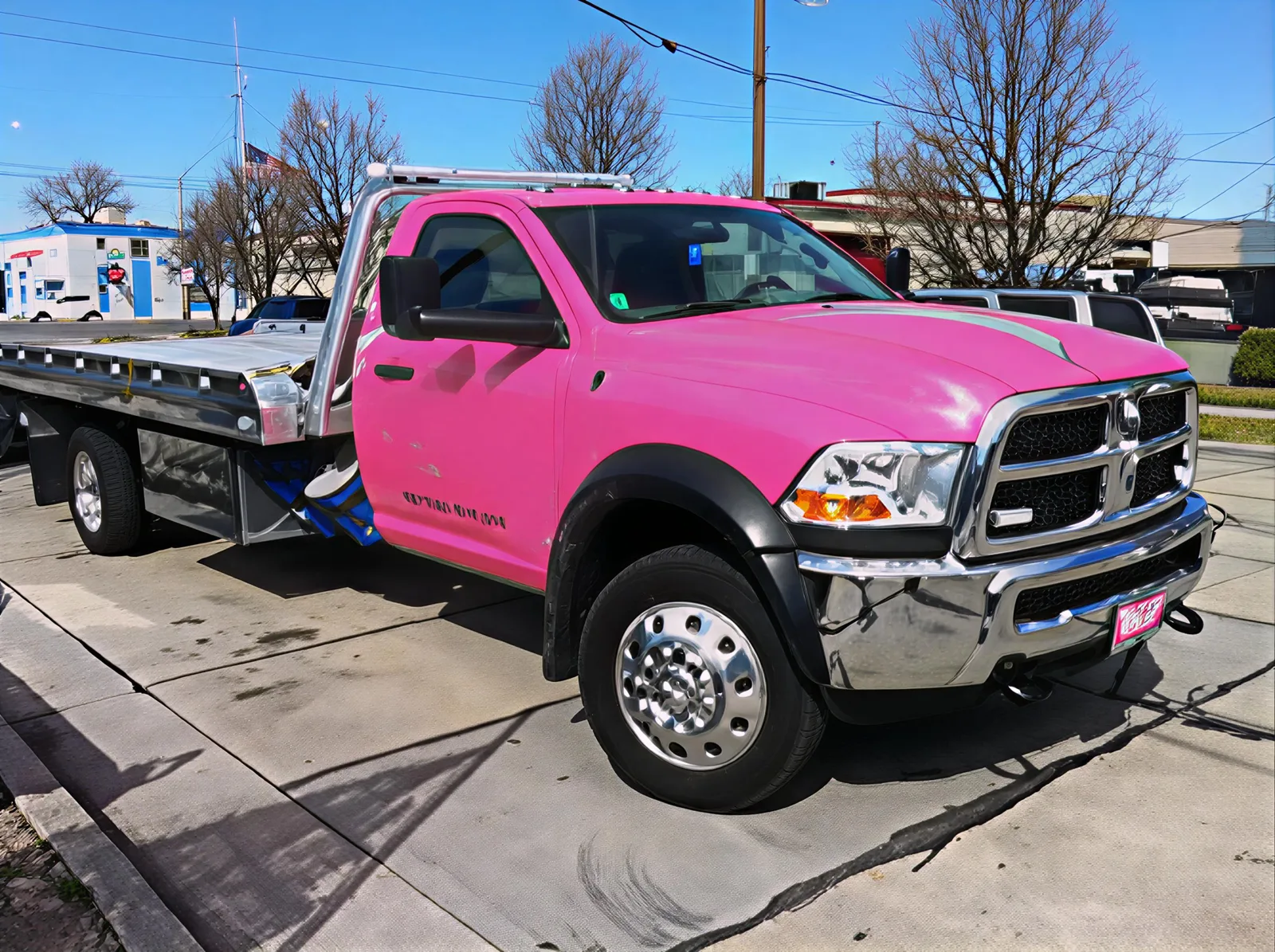
A flatbed with wheel chocks, soft loops, and a level deck gives a damaged motorcycle a controlled path. It can be winched up slowly instead of muscled, held upright the whole way, and secured before anybody lets go. That setup is what motorcycle towing in Melbourne is built around, and it is why a driver may winch even a bike that looks rollable. If yours went down, call (321) 728-1869 from wherever you are safe, or send the details and your photos to dispatch so the driver shows up knowing the damage.
Rider questions after a spill
The bike started right up after it fell. Is it safe to ride?
Starting only proves the engine runs. The risk after a spill sits in the brakes, levers, bars, and fork. If any of those are bent, cracked, or leaking, the bike should ride on a truck, and a shop should look at it before you ride it again.
Should I pick the bike up myself before the truck arrives?
Not if it means standing in a lane. If it is lying in traffic, get clear and call 911 first. Off the road, leave it on its side with the ignition off, and let the driver stand it up with the right equipment and a second set of hands.
Can the bike go straight to my house?
Yes, if that is where you want it. Plenty of riders take the bike home, let the adjuster see it there, and then choose a shop. Mention a sloped driveway or a tight garage on the call so the driver plans the unload.
Do you need the keys?
Keys help, because they unlock the steering and let the driver find neutral. If the keys are lost or the ignition is broken, tell dispatch, and the loading plan accounts for a front end that will not turn.
Bike down, rider okay?
Once the rider is fine, nothing about the bike is urgent. Call when you are clear of the road and have your photos.